

For many small business owners, the admin side of running a company is like eating vegetables. You know it's good for you, you know it's necessary—but when given the choice between closing a sale and reconciling a bank statement, the sale wins every time.

Yet bookkeeping is the financial backbone of your business. It tells you where your money's going, which products are actually profitable, and keeps you on the right side of the tax authorities.
The real question isn't whether bookkeeping needs to be done. It's who should do it. Should you roll up your sleeves and DIY, or hand the ledger to a pro? The answer depends on your business stage, your mindset, and how complex your financial life actually is.
Here's how to figure out if DIY bookkeeping is a smart money-saver or a costly distraction.
Signs DIY Might Work for You
Doing your own books isn't just about being cheap—it can be a strategic advantage, especially early on. When you handle the data entry, you get real-time visibility into your cash flow that no monthly report can match.
You're a solopreneur or micro-business. If you're a freelancer, consultant, or solo founder with no employees, your financial footprint is small. Maybe 50–100 transactions per month. Hiring a bookkeeper at this stage is often overkill—the volume doesn't justify the minimum monthly retainer.
You want to understand the numbers. Some owners are purely creative; numbers scare them. But if you're curious about how your business makes money, DIY is the best education you'll get. You'll learn exactly what you spend on software, how margins fluctuate, which clients pay late. That financial intimacy is valuable.
You have more time than cash. Classic startup reality. When you're bootstrapping, every dollar counts. A decent bookkeeper runs $300–800/month. If you're pre-revenue or barely profitable, saving that cash to reinvest elsewhere is often smarter—provided you actually have the hours to do the work.
Your business model is simple. A graphic designer billing five recurring clients, with expenses limited to Adobe CC, internet, and home office? That's a simple financial ecosystem. No inventory, no fluctuating COGS, no complex payroll. Service-based revenue like this is highly manageable for DIY.
When Complexity Kills DIY
The tipping point isn't revenue—it's complexity. You can have a $500K business that's easy to bookkeep (consultant with two big contracts) and a $50K business that's a nightmare (eBay reseller with thousands of tiny transactions).
Transaction Volume Matters
- Low (0–50/month): Ideal for DIY. 1–2 hours monthly.
- Medium (50–200/month): Manageable with automation, but needs weekly attention.
- High (200+/month): Risk zone. Fall behind even one month and catching up becomes brutal.
Complexity Red Flags
- Inventory: Buying, holding, and selling physical goods means tracking COGS. You need to know when inventory is a balance sheet asset vs. an expense. Many DIYers fail here.
- Sales tax: Selling to multiple states? Your books must support compliance. Economic nexus in 20 states without automated tools is dangerous to DIY.
- Payroll: Employees add liability. You're responsible for withholding taxes, Social Security, unemployment. Software handles calculations, but journal entries must map correctly to your books.
- Multi-currency: Billing in USD, paying contractors in EUR, buying software in GBP? You have foreign exchange gains/losses to track. Software can handle it, but you need to understand reconciliation.
The Real Cost: Your Time

Before committing to DIY, audit your resources honestly. It's not just money—it's opportunity cost.
The bookkeeper mindset. You don't need a CPA, but you need consistency and attention to detail.
- Consistency: Bookkeeping can't be "when I feel like it." It needs to be ritual. Can you block time every Friday or first Monday without fail? If you're the type who lets mail pile up, DIY will lead to year-end panic.
- Detail-orientation: You can't guess. If reconciliation is off by $0.43, you find it. If you're a "big picture" person who hates weeds, this will drain you.
The learning curve. You'll need basics of double-entry accounting, even if software hides it.
- Chart of Accounts: Categorizing transactions logically so reports make sense.
- Reconciliation: Matching software ledger to bank statements. Only when they match is work "done."
- Financial reports: Reading P&L (how much you made) vs. Balance Sheet (how healthy you are).
Time estimates:
- Simple service business: 2–4 hours/month (setup: 5–10 hours)
- E-commerce/inventory: 5–10 hours/month
- With employees: +2–3 hours/month for payroll
Ask yourself: If I spend 5 hours monthly on bookkeeping, what's that costing me? At $150/hour billable rate, you're "spending" $750 of your time to save a $400 fee. DIY is losing money.
Cost Comparison: The Real Numbers
DIY Route
- Software (QuickBooks, Xero, FreshBooks): $30–80/month
- Receipt capture (Dext, Hubdoc): $15–30/month (often skippable for tiny businesses)
- Training: Free to $100 one-time
- Your time: $0 cash, significant opportunity cost
- Total monthly: $30–110
Freelance Bookkeeper
- Monthly retainer: $300–600
- Software: You usually still pay ($30–80)
- Total monthly: $330–680
Accounting Firm / Virtual CFO
- Monthly retainer: $800–2,500+
- Includes: Bookkeeping, tax strategy, cash flow forecasting, monthly meetings
- Total monthly: $800+
The Hidden "Clean-Up Tax"
DIY badly for a year, then hand messy books to an accountant. Clean-up runs $100–150/hour.
Scenario: You "save" $400/month for 12 months ($4,800). But books are a mess. Accountant charges $3,000 to fix categorizations and reconcile before filing taxes.
Result: You saved $1,800 but spent ~60 hours doing it. You paid yourself $30/hour to be a frustrated, mediocre bookkeeper.
When to Stop DIY Immediately
Some situations make DIY reckless. If any apply, put down the spreadsheet and hire a pro.
You have investors or loans. Outside money means your books are legal reporting documents, not just for you. Investors expect GAAP-compliant financials. A DIY mistake can damage credibility or breach loan covenants.
You're paying penalties. Missed tax deadlines, underestimated quarterly payments, IRS payroll notices? The cost of penalties usually outweighs professional help.
Your "Uncategorized" bucket is huge. Dumping 30% of expenses in "Ask My Accountant" because you don't know where they go? Your reports are fiction. You're not doing bookkeeping—you're delaying the inevitable.
You mix personal and business finances. One account for groceries and business software? Untangling this is error-prone. A pro can help separate it (and force you to open a business account), but DIYing the separation is risky.
Tools That Make DIY Actually Work
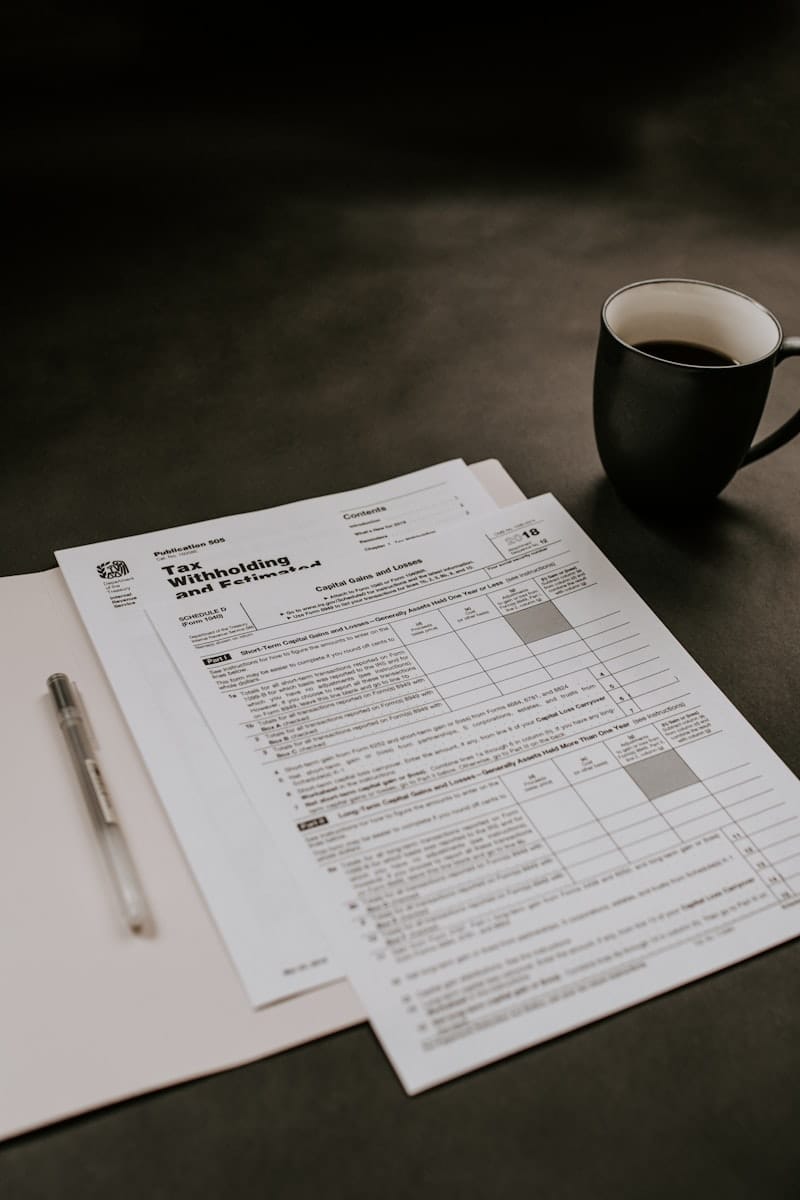
If you're proceeding, don't use a shoebox of receipts or Excel (unless under 10 transactions/month). You need automation.
Cloud accounting software. Non-negotiable. QuickBooks Online or Xero connect to bank feeds, import transactions automatically, and "learn" over time (remembering that "Shell Station" = Fuel Expense). Wave is a free alternative for very simple businesses.
Bank rules. The secret to efficiency. Tell your software: "If transaction contains 'Starbucks', auto-categorize as Meals & Entertainment and mark reviewed." Set rules for recurring expenses (rent, software, insurance, phone) and software does 80% of the work. You just review and click OK.
Receipt capture. Don't type data. Use mobile apps built into QuickBooks/Xero, or tools like Dext or Hubdoc. Snap a photo, AI reads vendor/date/amount, pushes to your software. Digital proof for every expense, audit-ready.
Separate business accounts. Never buy personal items on the business card. Never pay business expenses with personal cash if avoidable. Pure business bank feed = 10x easier job.
The monthly date. Put it on the calendar. First Friday or last Friday. Treat it like a client meeting. The longer you wait, the harder it gets. Memory fades—you won't remember what that $47.50 Amazon charge was three months ago.
Knowing When to Hand It Off
Growth usually means outgrowing DIY. Here's when to fire yourself.
Revenue benchmarks. Common rule of thumb: $250K–300K annual revenue. At this level, your time is too valuable for data entry, and tax implications of errors get serious.
Complexity creep. Time to outsource when:
- You hire your first full-time employee
- You start carrying significant inventory
- You expand to multiple locations
- You seek a business loan or line of credit
The blind spot. Looking at reports thinking, "I see numbers but don't know what they mean or how to fix the bad ones"? You need an advisor, not just a bookkeeper. A good financial pro interprets the story: "Labor costs up 10% while sales flat—we need to fix this." You can't get that insight if you're just categorizing receipts.
The Bottom Line
DIY bookkeeping is a rite of passage. It builds financial discipline and deep understanding of your business engine room. For simple, small, or cash-strapped businesses, it's a valid and smart choice—if you commit to the routine.
But recognize it for what it is: temporary. Your job is CEO, not CFO. Master the basics, build systems, and keep your eye on the horizon. The moment bookkeeping prevents you from growing the business is the moment you hand over the keys.