
You've just hired your first employee in Georgia. The W-4 is complete, payroll is set up, and the employee is ready for work. Then, during a bookkeeping review, you discover that payroll setup and Georgia new hire reporting are separate responsibilities, and the state deadline is already approaching.
That situation is common because the reporting task sits outside the normal payroll routine. The fix isn't complicated, but it does require a defined owner, accurate onboarding data, and a process that captures electronic filing details instead of relying on memory. This guide focuses on the operational problems that cause the most trouble, including missing Social Security numbers, electronic batching, rehires, and avoiding manual re-entry in your bookkeeping workflow.
Why Georgia New Hire Reporting Matters for Your Business
A new employee can receive a correct first paycheck while the business remains out of compliance. Payroll setup, tax forms, and Georgia new hire reporting are separate parts of onboarding, so completing one does not complete the others.
Every newly hired or rehired employee must be reported within 10 days of the hire date, and Georgia says no employers are exempt from the rule. The requirement covers employees who reside or work in Georgia, including full-time, part-time, and temporary workers. Georgia's New Hire Reporting Center explains the reporting requirement and covered workers.
The operational risk usually comes from unclear ownership. A payroll preparer may assume the bookkeeper filed the report, while the owner assumes the payroll service handled it. Meanwhile, the employee record may show payroll activation without any confirmed state submission.
Practical rule: Assign the Georgia new hire report to a specific person during onboarding, record the submission status, and store the confirmation with the employee's payroll records.
Why the state collects the information
Georgia's reporting framework supports more than internal payroll administration. The Georgia Department of Labor identifies Georgia statute 19-11-9.2 and the federal Personal Responsibility and Work Opportunity Reconciliation Act of 1996 as the legal foundation for reporting newly hired employees to the state directory. The program supports child support enforcement and workforce tracking, which is why the state requires a standardized employee record instead of an informal employer notification. The Georgia Department of Labor describes the statutory and federal basis for new hire reporting.
That legal history has a practical consequence for small businesses. Reporting is an established employer responsibility, not an optional administrative step to add after the company grows. The process should therefore sit alongside payroll onboarding, with a clear deadline and a retrievable filing record.
Where owners usually trip
The frequent mistake is treating worker status as a reason to skip the report. A part-time schedule does not remove the obligation, and a former employee who returns may need to be handled as a rehire. Review the employee's status before creating a new payroll record, especially when the person returns after a break.
Businesses that want to stay compliant with payroll regulations should document three items: who submits the report, where the confirmation is stored, and how the deadline is monitored. Connecting those steps to the bookkeeping workflow also prevents a second data-entry process. The owner can then compare the payroll roster with submitted reports and resolve missing records before they become an audit problem.
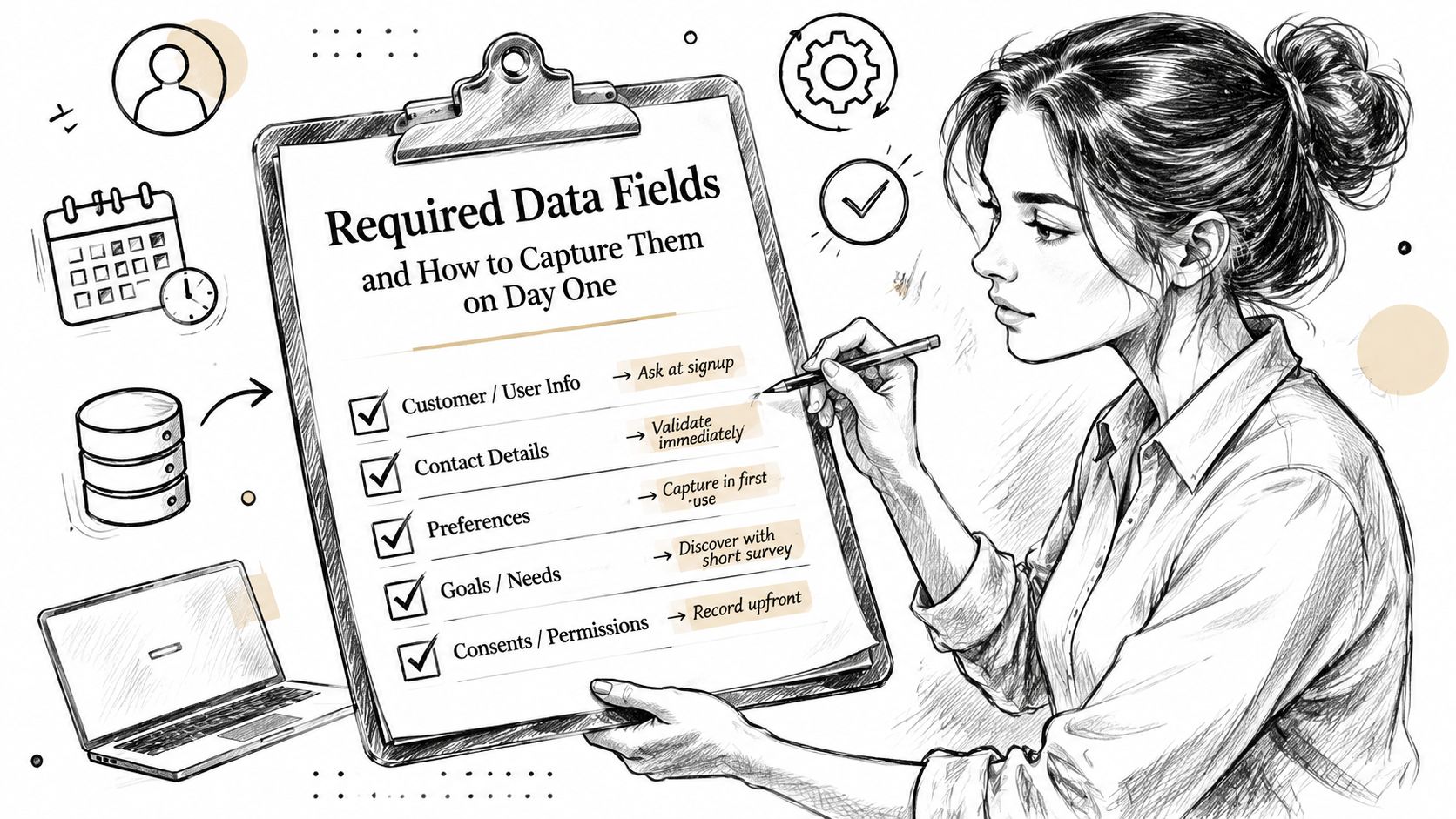
Required Data Fields and How to Capture Them on Day One
A new employee can be fully entered in payroll while the state report is still missing a field. Prevent that gap by collecting the reporting data during onboarding, before the employee record moves into the payroll queue. Georgia's report includes the worker's name, address, Social Security number, and date of hire, plus identifying information for the employer. The Georgia employer handbook outlines the required reporting information.
Build the record before you build the task list
Create one controlled onboarding record that connects the employee's tax forms, payroll profile, and state filing. Use this day-one sequence:
- Confirm the legal name: Take it from the employee's official onboarding documents. Do not substitute a nickname or shortened name used in an internal profile.
- Capture the current address: Enter a complete address and keep it consistent across payroll and reporting records. An employee working in Georgia may live elsewhere, so check the employee's residence rather than assuming the work location supplies every detail.
- Validate the Social Security number: Review the digits and formatting before transmission. If the number is missing, flag the record immediately instead of guessing, leaving a blank field unnoticed, or repeatedly retyping it between systems.
- Lock the hire date: Use the date recognized by payroll. A mismatch between the personnel record and state report complicates reconciliation.
- Attach employer identification: Keep the employer's identifying information with the submission record, particularly when multiple payroll entities are involved.
The state accepts submissions online, by fax, or by mail. Select the channel that matches your hiring volume and the controls your staff can maintain. The Georgia New Hire Reporting Center's submission channels provide the available filing options.
Keep evidence of what was sent
Save the confirmation or transmitted report with the employee's onboarding documentation. Do not scatter sensitive information across several systems. Your bookkeeping file needs a secure reference to the submission date, filing method, and confirmation status, while the source data stays in the appropriate restricted payroll record.
Build the check into the software workflow rather than asking someone to re-enter the same employee details. A payroll system or Gusto payroll workflow may help organize onboarding data, but verify whether it submits the Georgia report. Some systems collect the fields without transmitting the state filing, so assign an owner to confirm the submission and retain its evidence.
Understanding Deadlines and Electronic Batching Rules
The central Georgia deadline is straightforward. Report each newly hired or rehired employee within 10 days of the hire date, including workers covered by a recurring or seasonal hiring process. The difficulty appears when a business treats the deadline as permission to wait and assemble a monthly batch.
Electronic and magnetic submissions have a separate cadence requirement. The Georgia New Hire Reporting Center states that electronically filed reports are expected in two monthly transmissions no more than 16 days apart. The center's official FAQs explain the electronic transmission schedule.
What the batching rule means operationally
Batching can reduce repetitive work, but it doesn't remove the individual reporting deadline. A business hiring several employees should design its process so the reports are transmitted on time while still fitting the required electronic cadence. Waiting until the end of a month may create a problem if an individual hire has already passed the 10-day window.
A practical schedule uses two recurring review points during the month. At each review, the payroll owner compares the new employee list against the state reporting queue, confirms that each report is complete, and records the submission result. The exact calendar dates can vary, but the intervals must remain consistent with the state's stated transmission requirement.
Batching should reduce duplicate work, not postpone a report beyond the legal deadline.
Choose the filing method based on volume and control
Online filing is generally easier to monitor because it can provide a direct submission trail and avoids handling paper. Fax can work for a business with occasional hiring, provided someone saves transmission evidence and checks that the report was accepted. Mail creates a slower administrative trail and demands stronger internal deadline controls.
For seasonal businesses, rotating staff creates a special risk. Managers may hire workers quickly while the office team learns about those hires later. Put the reporting trigger in the hiring approval process, not at the end of the pay period. Multi-entity businesses should also identify the correct employer record before filing, because a report connected to the wrong entity can be difficult to reconcile even when the employee data is correct.
If a deadline is missed, don't hide the omission in the next batch. File as soon as the error is identified, retain a written explanation of what happened, and review the workflow that allowed the report to fall through.
Handling the Missing SSN Edge Case Without Breaking Compliance
The missing Social Security number is where a clean onboarding process meets real life. A new employee may still be waiting for documentation, correcting an identity record, or completing verification while the 10-day new hire reporting deadline continues to run. Waiting for perfect paperwork can create a reporting gap.
Georgia's updated guidance addresses a related payroll reporting problem. In August 2026, the Georgia Department of Labor said employers can use a department-approved placeholder number for quarterly wage reports while collecting the employee's Social Security number, provided they document timely efforts to obtain it and later file a correction. The Georgia Department of Labor describes the updated wage reporting guidance.
That guidance shouldn't be treated as a general license to insert an invented number into every filing. The employer must distinguish between the new hire report and quarterly wage reporting, follow the applicable department instructions, and maintain documentation.
Use an ownership workflow
Assign one person to own the missing-data case from start to finish. That person should record the date the SSN was requested, the follow-up attempts, the employee's response, and the date the correct number was received. Store the notes in a restricted payroll or personnel location, not in an open bookkeeping memo.
The workflow should include these checkpoints:
- At onboarding: Mark the SSN as pending and record who is responsible for follow-up.
- Before reporting: Confirm whether the Georgia new hire submission can be completed under the current state instructions. Don't substitute an unapproved value.
- During wage reporting: If the department-approved placeholder applies, document the timely effort to obtain the SSN and follow the required reporting procedure.
- When the SSN arrives: Update the payroll record, review affected filings, and submit the required correction.
- After correction: Save proof of the correction and close the outstanding task.
Separate missing information from incorrect information
A pending SSN and a suspected wrong SSN require different handling. If the employee supplies a number that fails an internal verification check, pause and investigate rather than repeatedly transmitting conflicting records. Keep the original data, correction notes, and communication history together so another team member can understand the sequence.
Small employers often fail here because nobody has a follow-up queue. A calendar reminder may work for a single hire, but a payroll task with an owner, status, due date, and correction field is more reliable. The objective is continuity, not speed at any cost.
Automating GA New Hire Reporting with Your Bookkeeping Stack
Manual filing is workable when hiring is rare and one person handles payroll from beginning to end. It becomes fragile when managers submit employee information through email, the bookkeeper rekeys it into payroll, and someone else separately enters it into the Georgia reporting system. Every handoff introduces an opportunity for a wrong address, an outdated hire date, or a report that never gets filed.
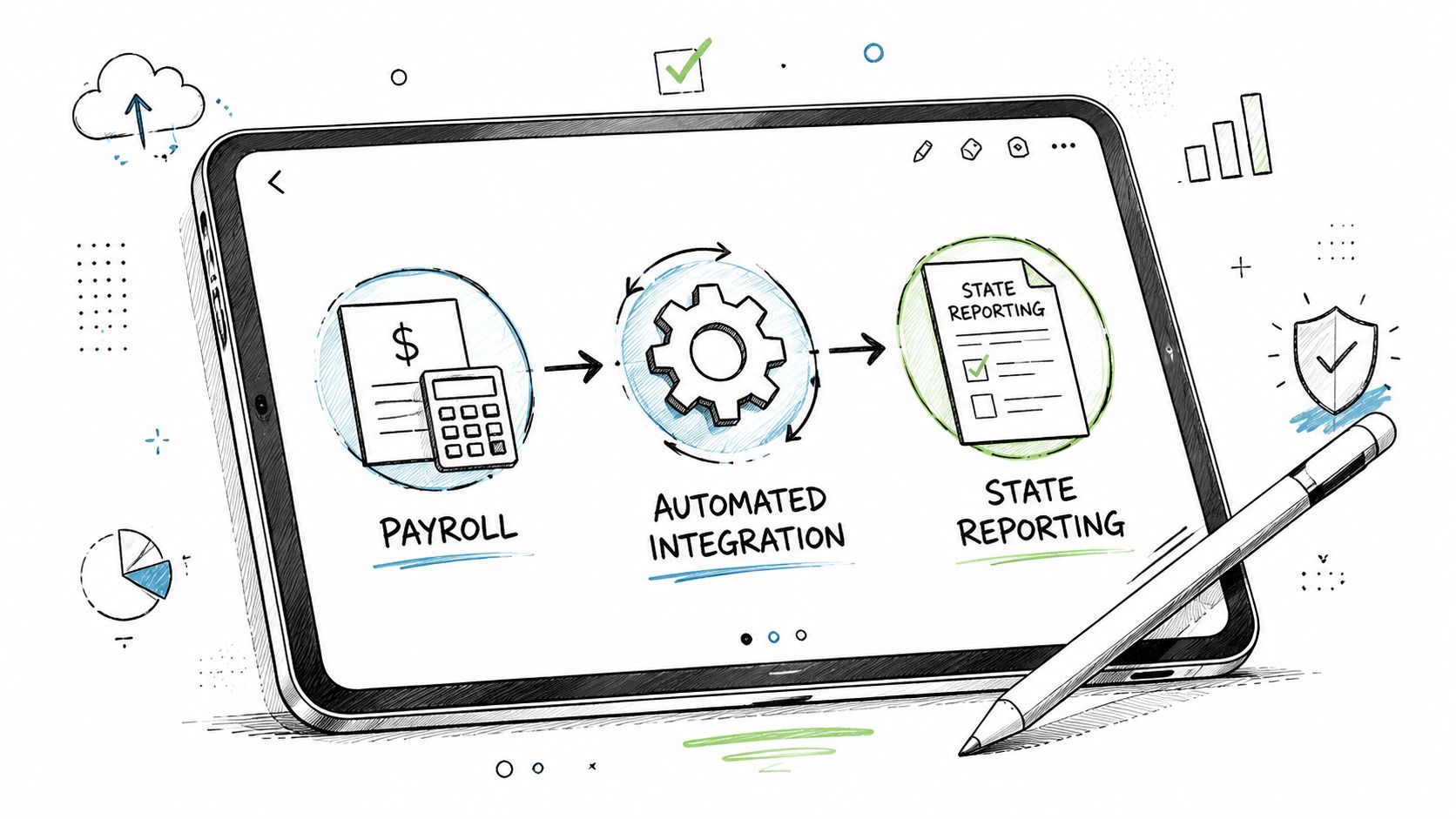
The strongest workflow uses payroll as the source record and bookkeeping as the control layer. Employee data should enter the system once, flow into the state reporting process, and return with a confirmation status that the bookkeeper can review. This doesn't mean every service files automatically. It means the business deliberately tests what the system does.

Compare the three workable approaches
Payroll-led filing places responsibility with the payroll provider or payroll administrator. This reduces duplicate entry, but the owner must confirm that Georgia new hire reporting is included, active, and available for the relevant payroll entity. Never infer state filing from the fact that federal payroll forms are handled.
Bookkeeping-led control keeps the accounting team responsible for monitoring the employee roster, deadline, and confirmation. This can be effective when the bookkeeper already performs payroll reconciliation, but it needs secure access and a clear escalation path for missing employee data.
Manual state filing gives the business direct control and can suit occasional hiring. Its weakness is not the filing itself. The risk comes from forgotten follow-up, lost confirmations, and repeated data entry. A manual process needs a written checklist and a recurring reconciliation between payroll records and reported hires.
Test the workflow before trusting it
Ask five practical questions before turning on automation:
- Does the system capture the employee's legal name, address, SSN, and hire date?
- Does it file with Georgia, or only prepare payroll records?
- Does it identify rehires and temporary workers correctly?
- Does it track the 10-day deadline?
- Can the business retrieve submission confirmation and correction history?
A useful payroll workflow reference can help you compare process requirements, but the final verification belongs with the employer. Run a controlled review with a new employee record, inspect the outbound filing status, and confirm where the evidence is stored. Automation works when it removes re-entry while preserving accountability.
Your Complete GA New Hire Compliance Checklist
A dependable Georgia new hire process is a chain of small controls. The person who approves the hire should trigger the workflow, the payroll owner should validate the data, and the bookkeeper should be able to confirm the state submission without searching through messages.
Before the employee starts
Create the employee record using the legal name and current address. Collect the Social Security number through a secure onboarding process, identify the correct employer entity, and record the hire date used by payroll. If the SSN is pending, open a tracked exception immediately rather than leaving the field blank without an owner.
On the hire date
Compare the onboarding record with the payroll profile. Check the employee's name, address, SSN, and hire date, then confirm the employer information attached to the report. Keep sensitive records restricted, and avoid copying the same identity data into unrelated spreadsheets.
During the reporting window
Submit the report through the selected channel, online, fax, or mail, while observing the state's electronic transmission requirements if you use electronic or magnetic filing. Record the submission date, filing method, employee identifier used internally, and confirmation details. A completed payroll setup is not proof that the Georgia report was transmitted.
If something is incomplete
For a missing SSN, document every timely effort to obtain it and follow the state's current instructions for any approved placeholder used in quarterly wage reporting. When the correct SSN arrives, update the record and file the required correction. Don't overwrite the history, because the sequence shows how the business handled the exception.
At reconciliation
Compare active payroll hires and rehires with the state reporting log. Investigate any employee who appears in payroll but not in the submission record, and check that the report belongs to the correct employer entity. Keep this review as part of your broader tax compliance workflow, not as an emergency task performed only after a deadline problem.
Businesses that are building a hiring process from scratch may also find a general hiring operations resource such as the Hire Sense homepage useful for organizing responsibilities, but Georgia reporting still needs its own state-specific control.
For a very small business, a secure checklist and one accountable owner may be enough. A growing employer should add automated deadline reminders, electronic confirmation storage, and exception tracking. A business with frequent seasonal hiring needs a roster reconciliation that catches workers added outside the normal office process.
BookkeepDIY helps small businesses evaluate bookkeeping and payroll tools, understand compliance workflows, and reduce manual back-office work. Visit BookkeepDIY to compare finance software and build a clearer process for Georgia new hire reporting.