
You're probably in one of two situations right now. Either you're setting up your books for the first time and a form asks you to choose cash or accrual, or you've been doing your bookkeeping one way for a while and you're starting to suspect your numbers don't tell the whole story.
That confusion is normal. The phrase accounting method cash or accrual sounds technical, but the core difference is simple. It comes down to when you count income and expenses.
That timing choice affects more than bookkeeping. It changes what your profit looks like, how steady your reports feel from month to month, whether your numbers make sense to a lender or board member, and when you may need to change methods for tax compliance. If you're a freelancer, a small business owner, or someone running a membership or nonprofit operation, that choice can shape day-to-day decisions in ways most basic guides skip.
What Are Cash and Accrual Accounting Methods
You send an invoice on December 28. Your client pays on January 10. The work is already finished, but your books can treat that sale in two different ways depending on the accounting method you use.
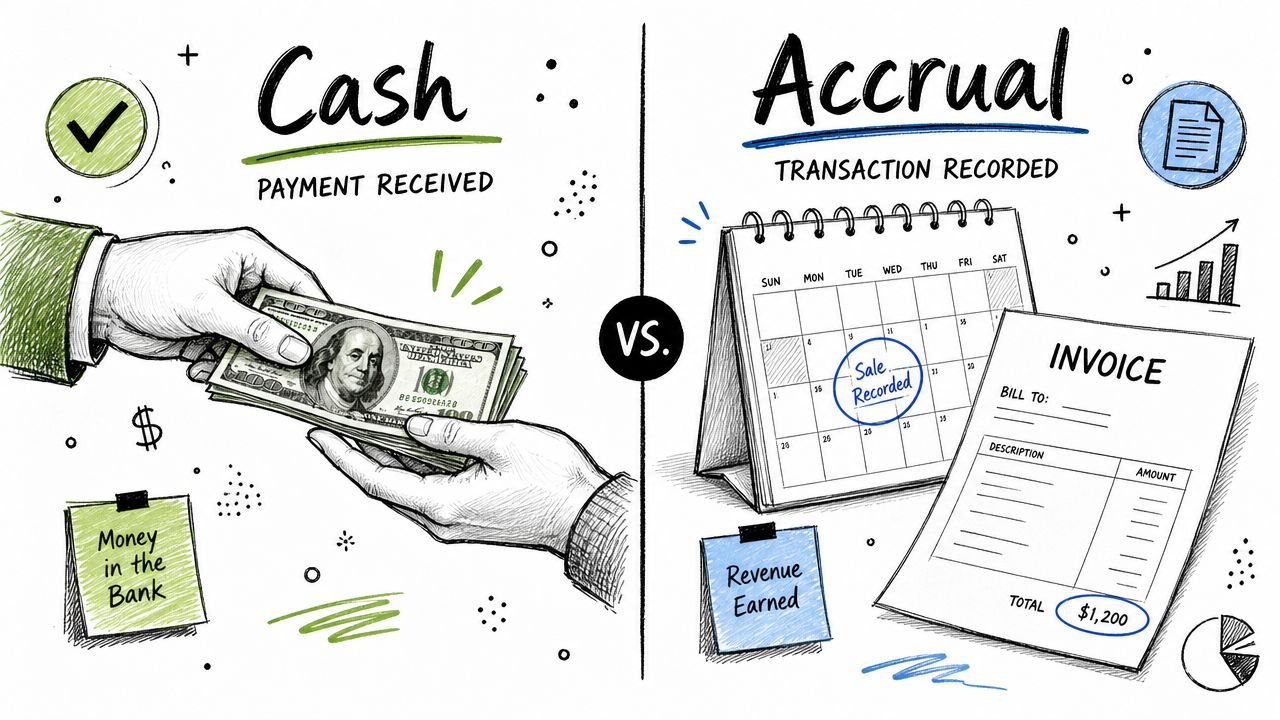
Cash accounting records income when payment is received and expenses when payment is made. Accrual accounting records income when it is earned and expenses when the business becomes responsible for them.
That sounds like a small timing difference. For a freelancer or small business owner, it can change how your monthly profit looks, how clearly you can spot slow-paying clients, and whether your books hide obligations that are still coming.
If you want a plain-language definition of the cash method, this cash basis accounting definition gives a helpful foundation.
How cash accounting works in plain English
Cash accounting follows the bank account closely. Money comes in, you record income. Money goes out, you record an expense.
Say you finish a project in December but do not get paid until January. Under cash accounting, the income lands in January. If you buy software in December and pay the bill in January, the expense lands in January too.
That is why cash accounting often feels easier at first. It matches what cleared the bank, which is useful when you are watching cash week by week and doing your own bookkeeping.
How accrual accounting changes the picture
Accrual accounting follows the work and the obligation instead of the bank timing.
Using that same freelance project, you would record the income in December because that is when you earned it. If a contractor does work for you in December and sends the bill later, that cost still belongs to December because that is when your business used the service.
This method usually gives a more complete view of how a month went. You can see revenue you earned but have not collected yet, and expenses you owe even if the payment has not left your account.
For growing businesses, that matters. A cash-only view can make one month look unusually strong because several payments happened to arrive together. It can also make another month look weak even though the work was completed and the sales were real.
Where owners get confused
The biggest point to keep straight is this: profit and cash are different measurements.
Cash tells you what money is available right now. Accrual helps show whether the business activity for that period was profitable. Both matter, but they answer different questions.
Small businesses can slip into a hybrid trap without realizing it. For example, a business may use cash-style thinking for income because it feels simple, but mentally ignore prepaid work, open invoices, unpaid bills, or customer deposits tied to future work. The result is books that look clean on the surface but miss part of the story underneath.
A web designer who collects annual retainers up front may look flush with income on a cash basis in the month payment arrives. Part of that money may really relate to work that will be delivered over the next several months. A membership business can run into the same issue. The cash is in the bank, but some of it represents future obligations.
That is the practical difference. Cash accounting helps you track money movement. Accrual accounting helps you see business activity in the period where it belongs.
Cash vs Accrual Accounting A Side-by-Side Comparison
A side-by-side view helps because both methods can look reasonable until timing starts to distort the picture.
A simple way to frame it is this. Cash accounting follows money as it enters and leaves your bank account. Accrual accounting follows the work, sale, or expense in the period it belongs to. For a freelancer with a few quick-pay clients, those two timelines may stay close together. For a growing business, they often drift apart.
Comparison of Cash vs Accrual Accounting
| Criterion | Cash Basis Accounting | Accrual Basis Accounting |
|---|---|---|
| When income is recorded | When payment is received | When income is earned |
| When expenses are recorded | When payment is made | When the expense is incurred |
| Day-to-day simplicity | Usually easier to maintain | Usually requires more tracking |
| View of profitability | Can look uneven when payments are delayed or bunched together | Usually gives a steadier picture of performance |
| Unpaid invoices and bills | Often left out of the main picture | Included as part of the books |
| Fit for formal financial reporting | Less suitable when others need a full picture | Better suited when outside readers want complete reporting |
| Cash visibility | Strong for seeing what has actually cleared | Stronger for seeing obligations, but less tied to bank timing |
| Best fit in practice | Often used by very small service businesses and solo operators | Often used by growing businesses or those needing fuller reporting |
What the table means in real life
If you invoice a client on March 28 and they pay on April 10, cash accounting places that income in April. Accrual places it in March, because that is when the work was completed and earned.
The same timing issue shows up with expenses. If you receive a contractor bill in June but pay it in July, cash pushes the cost into July. Accrual keeps it with June, which usually gives you a cleaner view of what that month cost to run.
That difference matters most when your business has any lag between the work and the payment.
Where cash accounting tends to work well
Cash accounting often fits businesses that are small, service-based, and paid quickly. Many freelancers start there because it mirrors the bank balance they already watch every week.
It can also be easier to maintain if you have:
- a small number of clients
- few unpaid invoices at month-end
- minimal unpaid bills
- no customer deposits tied to future work
For owners who mainly want to answer, "How much cash do I have available right now?", cash gives a direct answer.
Where accrual gives a clearer picture
Accrual starts to earn its keep when timing gets messy. That includes businesses that bill after work is done, collect retainers, carry products, or regularly owe vendors before payment goes out.
A good example is a designer who collects an annual retainer upfront. On a cash basis, the month that payment arrives can look unusually profitable. In practice, some of that money belongs to future months because the work still has to be delivered. That is the hybrid trap. The cash feels like earned income, but part of it is really a future obligation.
The same issue appears in product businesses. If you buy goods now and sell them later, timing around inventory becomes part of the story. A more detailed look at inventory cost accounting methods for small businesses helps explain why cash-only thinking can blur what each sale really costs.
The trade-off most owners care about
Cash accounting is easier to keep up with. Accrual usually gives better management information.
Neither point should be ignored.
If you run a solo business with fast payments and simple expenses, cash may be enough for now. If you are trying to judge monthly performance, plan for taxes, review open invoices, or avoid overstating income from prepayments, accrual gives you a more dependable map.
The better choice is the one that matches how your business operates, not just the method that feels easiest in the first month.
IRS Rules and When You Are Required to Switch
Some owners assume the choice is purely personal preference. It isn't always. Tax rules can force the issue.
Historically, the IRS has limited cash-basis eligibility to businesses with average annual gross receipts of $1 million or less over prior years, and businesses above that threshold have been required to adopt accrual accounting under IRC Section 471. If a business changes methods, it must file Form 3115 to manage that transition, as explained in this Paro overview of accounting methods for small businesses.
What that means in practice
If your business is small and straightforward, cash accounting may be allowed. Once your operation grows past the historical threshold described above, the IRS has required a move to accrual.
That matters because the switch isn't just a preference change inside your bookkeeping software. It changes how you recognize income and expenses for tax purposes.
Common triggers that push businesses toward accrual
Some situations make cash accounting harder to justify, even before you get into technical tax details.
- Revenue growth: As receipts rise, the IRS may no longer allow cash treatment under the historical rule above.
- Inventory: If your business carries products, timing becomes more complex. Inventory cost accounting is often one of the first places where simple cash thinking starts to break down.
- Outside reporting needs: A lender, investor, or other reviewer may expect financials that reflect work performed and obligations incurred, not just cash movement.
If your books say one thing and your tax method requires another, cleanup gets expensive and time-consuming fast.
What Form 3115 is for
Form 3115 is the formal IRS process for changing an accounting method. The idea is to prevent items from being counted twice or skipped entirely during the change.
For example, if you move from cash to accrual, you may need to bring unpaid customer invoices and unpaid expenses into the books so your income isn't distorted during the switch. That's the part many owners underestimate. The filing is important, but the underlying cleanup matters just as much.
A practical way to think about the rule
Don't wait until tax season to ask whether you should switch. Ask while you're reviewing your bookkeeping process.
If your business has grown, if you now bill in ways you didn't before, or if your reporting needs have become more formal, it's worth checking whether your current method still fits. Even when the IRS hasn't forced the change yet, the business itself may have outgrown the simplicity of cash basis.
How to Choose the Right Method for Your Business
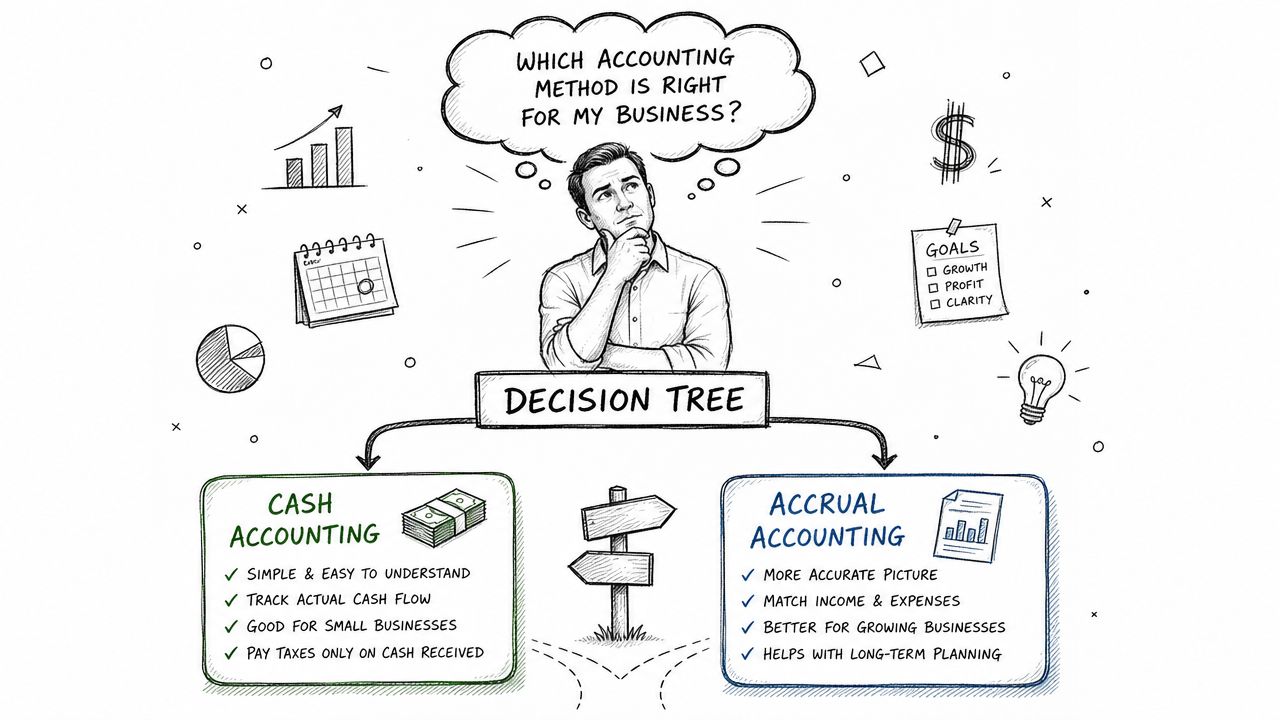
Choosing an accounting method cash or accrual isn't about picking the “advanced” option. It's about picking the method that matches how your business earns money.
A solo designer who gets paid quickly after each project faces a different reality than a retailer ordering stock months ahead, or a membership-based business collecting annual fees up front. The right answer depends on the shape of your work.
Start with your business model
Ask yourself what happens between doing the work and getting paid.
If the answer is “not much,” cash may work fine for now. If the answer includes invoices, retainers, annual plans, prepaid packages, dues, deposits, or delayed collections, you need to look harder at accrual.
Here's a useful lens:
- Simple service work: Often a candidate for cash if transactions are straightforward.
- Inventory-based operations: Usually need stronger matching between sales and related costs.
- Subscription or membership income: Often creates timing issues that cash accounting hides.
- Nonprofits and pledge-based organizations: Need to see commitments before cash arrives.
The questions that usually lead to the right answer
A good decision often comes from a few plain questions.
Are you trying to understand cash, or performance
If your main concern is “Can I pay next month's bills,” cash reports are helpful.
If your concern is “Did this month's work make money,” accrual gives a more reliable answer because it puts revenue and related costs in the same period.
Do you bill ahead, collect ahead, or wait to be paid
Many service businesses often err in their accounting choices. If clients prepay for work that will be delivered over time, cash accounting can make one month look fantastic and later months look weak, even though you're still carrying the obligation to deliver.
That problem is even sharper for nonprofits and membership-based businesses. Data shows 68% of small nonprofits switch to accrual by year 3 because cash basis masks the lag between a pledge and its cash receipt, creating a misleadingly volatile picture. The same source describes this as a hybrid trap that also affects membership-based freelancers, in Jitasa's discussion of cash versus accrual for nonprofits.
A prepayment isn't always “free money this month.” In many businesses, it's partly a promise to deliver later.
Will someone else read your numbers
If you're applying for financing, reporting to a board, or trying to understand whether a line of business is profitable, accrual reports usually answer better questions.
Cash reports can still be useful. Many owners use them for short-term money management. They just shouldn't be the only lens when timing differences are large.
The hybrid trap in real life
Here's a common example. A coach sells annual memberships in January and receives a wave of cash immediately. Cash accounting may show a great month. But that owner still has many months of service to deliver.
If they hire too quickly, spend based on that apparent January “profit,” or judge the business by that spike, they can make bad decisions. The numbers weren't lying exactly. They were just answering a narrower question than the owner thought.
That's the heart of the hybrid trap. You run the business as if obligations stretch across time, but your books report as if only the bank balance matters.
A simple rule of thumb
Cash accounting often works best when money movement and work timing are close together.
Accrual becomes more valuable when time separates the work, the bill, the payment, and the obligation. The more distance there is between those events, the more likely cash accounting will blur the truth.
Switching From Cash to Accrual Step by Step
Once you decide to switch, the work becomes practical. The move is manageable if you do it in order.
Pick a clean start date
Most businesses choose the start of a fiscal or tax year. That keeps reports from mixing two methods inside the same year and makes comparisons easier.
If your records are messy, clean them before the switch. You want open invoices, unpaid bills, deposits, and prepayments identified clearly.
Bring unpaid amounts into the books
Cash accounting often leaves timing items sitting outside the main reports. Accrual needs them recorded.
List unpaid customer invoices
If you earned the income but haven't been paid yet, it belongs in accounts receivable under accrual.List unpaid vendor bills
If you owe for goods or services already received, that belongs in accounts payable.Review prepayments and deposits
Money received in advance may not all belong to the current period. Money paid in advance may need to be spread over time rather than expensed immediately.
A simple before-and-after example
Suppose you completed work for a client before year-end but payment won't arrive until later.
- Under cash, there may be no income entry yet because no money arrived.
- Under accrual, you record revenue and a receivable because the work is done.
Now flip it for a bill.
- Under cash, there may be no expense entry yet because you haven't paid it.
- Under accrual, you record the expense and a payable because the obligation already exists.
Practical rule: if the business event already happened, accrual usually wants it in the books, even when the cash hasn't moved.
Review your chart of accounts
A cash-basis setup can be minimal. An accrual setup usually needs a few more working parts, such as:
- Accounts receivable
- Accounts payable
- Deferred or unearned revenue
- Prepaid expenses
You don't need a giant chart of accounts. You do need one that reflects timing.
Handle the tax method change properly
Changing your books and changing your tax accounting method are connected, but they aren't the same thing. If your tax method is changing, you'll need to file Form 3115 as discussed earlier.
That filing matters because the IRS wants a consistent transition. Without that step, income or expenses can land in the wrong period, or get counted twice.
Test your first reports carefully
After the change, compare a few months of reports with what you know happened operationally.
Check for questions like these:
- Do unpaid invoices now appear where expected
- Are old bills showing up correctly
- Did any customer prepayments get treated as immediate income by mistake
The first accrual reports often feel strange if you're used to cash. That doesn't mean they're wrong. It usually means you're seeing a fuller picture for the first time.
How Bookkeeping Software Supports Each Method
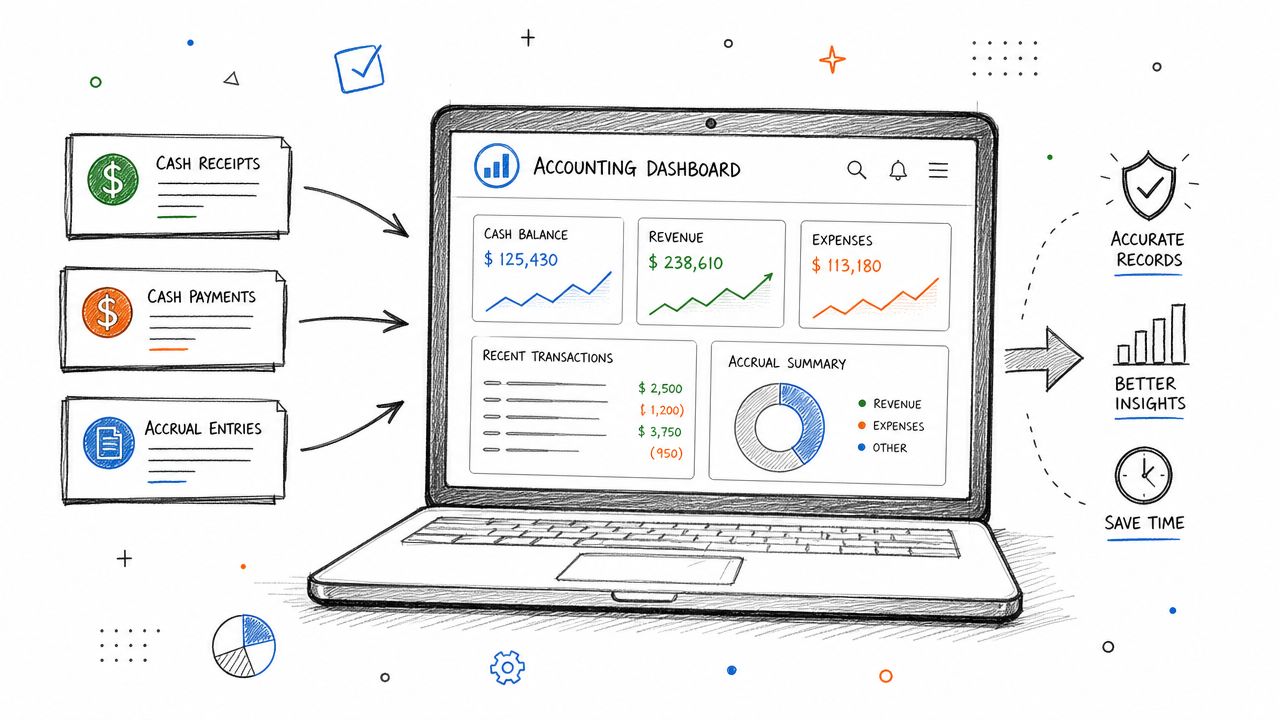
Most modern bookkeeping systems are built to handle accrual-style records because that structure tracks invoices, bills, receivables, payables, and timing differences more completely. That doesn't mean cash-basis users are stuck. It means the system often stores the fuller data first, then lets you view reports through different lenses.
What to look for in software
If you're evaluating bookkeeping software, focus less on the marketing label and more on what the system can do.
- Cash-basis reporting: Can it generate profit and loss reports on a cash basis when you need them?
- Accrual reporting: Can it also show earned revenue, unpaid invoices, and unpaid bills clearly?
- Invoice and bill tracking: If the tool can't manage timing items well, accrual bookkeeping becomes clumsy.
- Adjusting entries: You'll want the ability to record year-end or month-end timing adjustments cleanly.
- Report flexibility: The best setup lets you look at the same business from more than one angle.
For example, if you're researching options, it helps to see how a platform handles reporting views and bookkeeping workflows before committing. A starting point could be this QuickBooks Online listing, not because one tool fits everyone, but because the evaluation criteria are what matter.
Why this matters for small businesses
Software can reduce the fear around accrual accounting. You don't have to build every report by hand. If the underlying records are set up correctly, you can often review cash-oriented reports for daily decisions and accrual-oriented reports for performance review.
That flexibility is especially useful when your business sits in the middle. Maybe you still think in cash because that's how you manage payroll and bills, but you also need clearer monthly performance numbers. Good software should support both views without forcing you into sloppy workarounds.
A practical checklist
When reviewing any bookkeeping system, ask:
- Can I switch report views without rebuilding transactions
- Can I track customer balances and vendor balances
- Can I separate cash collected from revenue earned
- Can I see prepayments and future obligations clearly
If the answer is yes, the software can support either method much more smoothly.
Common Questions About Accounting Methods
Can I use a hybrid method
Some businesses do use a mix in practice, but owners often encounter trouble as a result. A casual hybrid approach often means you record some things when cash moves and other things when it feels convenient. That creates reports that are hard to trust.
If you're using a mixed approach, it needs to be deliberate, consistent, and appropriate for your tax and reporting needs. Random mixing is not a method. It's usually a bookkeeping problem.
Does my choice affect my personal taxes as a sole proprietor
If you report business activity on your personal return, your business accounting method affects how business income and expenses flow into that filing. The choice doesn't change the basic fact that business results affect your personal taxes. It changes when items show up.
That timing can make one tax year look heavier or lighter than another.
How often can I change methods
This isn't something to change casually every year based on what looks favorable. Once you adopt a method, consistency matters. A formal change may require IRS approval through Form 3115, so think of the method as part of your accounting foundation, not a seasonal setting.
Is cash accounting always easier
At first, yes. Over time, not always.
If your business starts collecting prepayments, carrying unpaid invoices, managing deposits, or explaining performance to outside readers, cash accounting can become harder because you end up maintaining side lists and mental adjustments to understand what's really happening.
Which method is better for decision-making
For short-term cash management, cash reports are very useful.
For understanding profitability, timing, and obligations, accrual is usually stronger. Many small businesses benefit from keeping books detailed enough to support accrual thinking, then reviewing cash reports alongside them for daily operations.
If you're sorting out accounting method cash or accrual and want clearer explanations before you choose software or clean up your books, BookkeepDIY is a practical place to start. It helps freelancers and small businesses compare bookkeeping tools, understand accounting terms in plain English, and make better back-office decisions without wading through vendor jargon.