
For most small businesses, monthly bookkeeping services cost between $200 and $2,500, with a common sweet spot around $500 to $900. That range is wide for a reason, and the difference usually comes down to transaction volume, reporting needs, and whether your industry creates extra bookkeeping work.
If you're pricing help right now, you've probably seen quotes that seem to describe completely different businesses. One provider offers a low monthly fee that looks manageable. Another comes in much higher and says the first quote probably excludes half of what you need. Both can be right.
The mistake is assuming bookkeeping is priced only by business size or revenue. In practice, industry complexity changes bookkeeping service cost more than many owners expect. A solo consultant with clean monthly activity is one kind of job. A restaurant with daily sales reconciliations, inventory movement, and cash handling is another. A construction firm that needs project tracking is another again.
That's why the useful question isn't just “What does bookkeeping cost?” It's “What does bookkeeping cost for a business like mine?”
Demystifying Bookkeeping Prices in 2026
Owners usually start with the same assumption. They think bookkeeping is a standard service with a standard price. Then the quotes start coming in, and one firm says basic monthly support starts low, another says anything serious costs far more, and neither proposal uses the same scope.
The broad market range is real. In 2026, small businesses in the United States typically pay $200 to $2,500 per month for bookkeeping services, with starter packages at $200 to $400, median recurring costs around $500 to $900, and extensive support for more complex businesses reaching $2,500 per month, according to small business bookkeeping cost data for 2026.
Why quotes vary so much
A quote changes when any of these change:
- Transaction load: More sales, bills, refunds, transfers, and card activity create more review and reconciliation work.
- Service scope: Basic categorization costs less than month-end close, payroll support, receivables, payables, and management reporting.
- Industry demands: Some businesses need clean books. Others need clean books plus tracking by project, job, location, class, or sales channel.
- Book condition: If the books are already behind or inaccurate, the monthly fee won't tell the full story.
Practical rule: A cheap quote isn't cheap if it excludes the work your business actually needs every month.
What owners often miss
Many generic guides tell you a range and stop there. That's where confusion starts. The key driver isn't only how big the business is. It's how hard the books are to keep accurate.
A service business with a few clients and simple expenses can often stay near the lower end of the market. A business with inventory, tipped staff, progress billing, customer deposits, multi-location reporting, or industry-specific tracking won't.
If you're trying to budget accurately, stop comparing yourself to “small businesses” in general. Compare yourself to businesses with the same bookkeeping pattern as yours.
The Three Main Bookkeeping Pricing Models
A contractor with three active jobs, a Shopify store processing daily refunds, and a neighborhood restaurant closing out card batches every night can all ask for “monthly bookkeeping” and get very different quotes. The pricing model is often the reason. It determines whether you pay for time, volume, or a defined package of work.

Hourly billing
Hourly billing is the simplest model to understand. You pay for the time spent on your books.
This works well when the scope is unclear. Catch-up work, historical cleanups, system corrections, and short-term support usually fit hourly pricing better than a fixed package. If I am looking at books that are six months behind, or a file with uncategorized transactions and unreconciled accounts, I would rather see hourly billing than a flat fee based on guesswork.
It can also be the fairer option for industry-specific work that comes in bursts. Construction is a good example. One month may be quiet. The next may involve job-cost corrections, progress billing review, retainage tracking, and draws tied to lender reporting. A flat fee can miss that swing.
The trade-off is obvious. Your cost moves with the time required, and time increases fast when records are disorganized, documents are missing, or the workflow depends on manual fixes.
Fixed monthly pricing
Fixed monthly pricing gives you a set fee for a defined scope of recurring work. For an owner who wants a predictable budget, this is usually the easiest model to live with.
It works best when the bookkeeping process is stable and the engagement is clearly written. That means the agreement should spell out what is included: number of accounts, reconciliations, monthly reports, accounts payable or receivable support, payroll posting, and how cleanup work is handled if the books fall behind.
This model is often a strong fit for service businesses with steady activity. It can also work well in more complex industries, but only if the package reflects the actual workflow. An e-commerce business may need channel deposits reconciled, sales tax mapped across states, and payment processor fees cleared properly each month. A restaurant may need daily sales summaries, tip and payroll coordination, and tighter cash controls. If those steps are missing from the fixed-fee scope, the quote is not really fixed. It is just incomplete.
One line in the proposal matters more than owners expect. Ask how the firm handles work that exceeds the agreed volume or transaction processing cost assumptions.
Per-transaction pricing
Per-transaction pricing charges based on activity volume rather than time or a broad monthly package. On paper, it sounds precise. In practice, it works best only when your transaction pattern is both low and predictable.
A very small consulting firm might do fine with this model. A retail, e-commerce, or restaurant business usually will not. Those businesses generate refunds, transfers, merchant deposits, payout splits, inventory purchases, and other entries that make “one transaction” a poor proxy for the actual bookkeeping effort. The count may look manageable while the review work behind it is anything but simple.
That is where owners get surprised. The model rewards clean, repetitive books. It becomes expensive, or incomplete, when volume jumps during busy seasons or when transactions require matching, clearing, and exception handling.
Which model fits which business
Use the pricing model that matches the shape of your books, not just the headline price.
- Choose hourly for cleanup work, messy books, short-term help, or any situation where the scope is still being discovered.
- Choose fixed monthly for stable recurring work with a written scope that matches your industry's reporting and reconciliation needs.
- Use per-transaction carefully if your business has seasonal spikes, multiple sales channels, inventory, tipped payroll, or project-based accounting.
The practical question is not which model sounds cheapest. It is which model prices your actual workload accurately.
What Determines Your Monthly Bookkeeping Cost
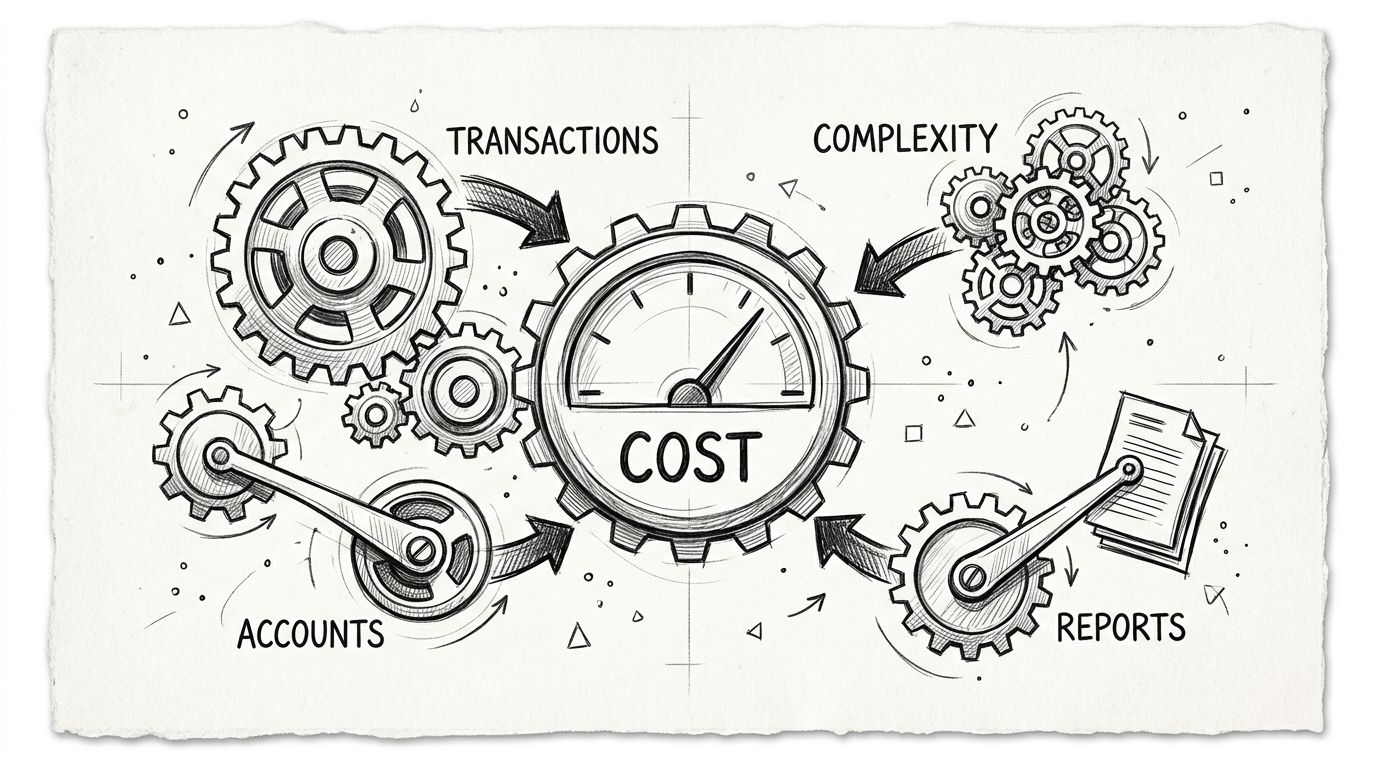
Price rises for obvious reasons like more accounts and more transactions. But the bigger issue is often what those transactions mean.
A consulting business and a restaurant can each have the same monthly revenue and still produce very different bookkeeping work. One may need straightforward reconciliation and a standard profit and loss statement. The other may need daily sales reconciliation, payment processor matching, inventory-related entries, and tighter review around cash handling.
The direct cost drivers
Most monthly fees move up when these factors are present:
- More financial accounts: Every bank account, credit card, loan, and payment processor creates another reconciliation point.
- More reporting needs: If you want job-level, class-level, or location-level reporting, someone has to maintain that structure accurately.
- Receivables and payables: Tracking unpaid customer invoices and unpaid vendor bills adds process, not just data entry.
- Payroll coordination: Even when payroll is handled separately, bookkeeping still has to record and reconcile it correctly.
If terms like categorization, timing differences, or account mapping feel murky, a plain-language definition of processing cost helps explain why some workflows consume more bookkeeping time than owners expect.
Why industry complexity matters more than generic ranges
Generic guides often quote $300 to $1,000 per month for small businesses. That range may be true in a broad sense, but it can mislead owners in more demanding industries. Businesses that require class tracking or project tracking can see costs double, pushing them into $1,500+ per month tiers, according to industry complexity guidance on bookkeeping pricing.
That shows up clearly in a few common industries:
Construction
Construction books rarely stay simple. You may need project-level cost tracking, progress billing, subcontractor payments, retention handling, and job profitability reporting. Even if monthly transaction count looks manageable, the coding accuracy has to be tighter.
Restaurants
Restaurants create bookkeeping friction in different ways. Daily sales summaries, tips, merchant deposits, cash over-and-short issues, inventory movement, and multiple payment channels all add review work. A low “basic bookkeeping” quote often assumes none of that detail.
E-commerce
E-commerce can look automated from the outside, but the books often aren't. Multiple sales channels, refunds, fees, shipping adjustments, sales tax issues, and payout timing can create a messy trail if the file isn't built correctly.
If your business needs bookkeeping by project, location, class, menu category, or sales channel, you're not buying a standard package. You're buying structure and review.
What usually keeps costs lower
Simple businesses usually share a few traits. They have fewer accounts, fewer exceptions, consistent monthly activity, and less need for segmented reporting.
That's why a solo consultant with recurring clients may pay far less than a business with similar revenue but heavier operational complexity. Revenue doesn't reconcile the books. Transactions do.
Typical Cost Ranges by Business Size
A one-person consulting firm and a one-location restaurant can post similar revenue and still need very different bookkeeping budgets. Size matters, but operating model matters just as much.
That is why broad monthly ranges only work as a starting point. As noted earlier, very small businesses often fall near the low end of the market, established small businesses with steady monthly activity usually sit in the middle, and companies with more volume, staff, entities, or reporting needs move higher quickly.
Estimated Monthly Bookkeeping Costs by Business Size 2026
| Business Size / Stage | Typical Monthly Cost | What usually drives the price |
|---|---|---|
| Solopreneur / Freelancer | $250 to $500 | Few accounts, limited monthly transactions, simple reporting, and clean records coming in |
| Small Business | $400 to $1,200 | More accounts to reconcile, owner draws or reimbursements, basic payroll entries, and regular month-end reports |
| Growing Business | $1,000 to $2,500 | Higher transaction volume, multiple bank or credit card accounts, tighter close process, and support for payroll, invoicing, or bill tracking |
| Multi-location or operationally complex business | $2,000 to $5,000+ | Class or location tracking, inventory or job costing, multiple systems, and heavier review work each month |
Those numbers get more useful once you match them to the way your business runs.
A solo consultant with one checking account, one credit card, and recurring client invoices may stay near the bottom of the range. A contractor with the same headcount can cost far more because each month may involve job costing, progress billing, subcontractor payments, retention, and draws against project deposits. The size looks similar. The bookkeeping work does not.
The same pattern shows up in retail-heavy businesses. An e-commerce seller with marketplace payouts, refunds, processor fees, sales tax adjustments, and inventory movement often needs more cleanup and reconciliation time than a service business twice its revenue. If your books depend on accurate payout matching, bank feeds and reconciliation workflow quality has a direct effect on what you will pay.
How to use the ranges without underbudgeting
Use business size to get your first estimate. Then pressure-test that estimate against your industry and reporting needs.
Ask these questions before you accept a quote:
- How many accounts need monthly reconciliation?
- Do you need books by job, location, class, or sales channel?
- Are inventory, tips, subcontractors, or merchant processors part of the monthly workflow?
- Is the provider pricing for clean books, or assuming regular corrections and follow-up?
If the quote is far below the range that fits your operation, the missing cost usually shows up later as add-on work, delayed closes, or reports that are too shallow to run the business. A fair price is the one that matches the actual monthly workload.
Unpacking Common Add-On Service Costs
A quote can look reasonable until the first month closes and the provider sends a second invoice for cleanup, old unreconciled periods, payroll posting fixes, or invoice tracking. That is common, especially in businesses where the bookkeeping file carries more operational detail than a basic service package assumes.
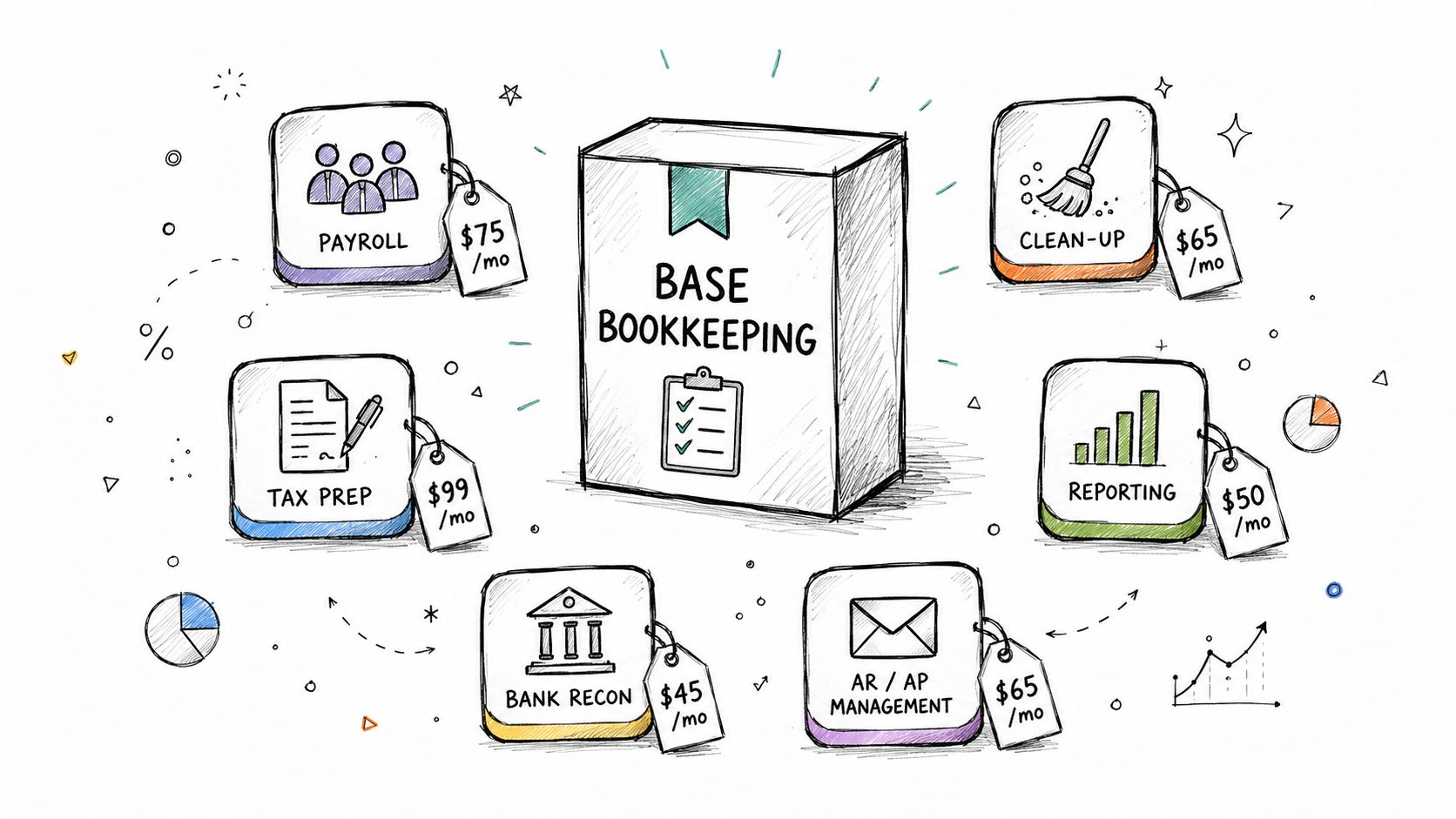
The biggest pricing mistake I see is treating add-ons as optional extras in every industry. They are not. In some businesses, they are part of keeping the books usable.
A consultant may only need monthly categorization, reconciliations, and a clean profit and loss. A contractor often needs job-level coding, subcontractor tracking, draws, deposit clearing, and follow-up on customer balances. A restaurant may need POS clearing, tip allocations, sales tax adjustments, and inventory-related entries. An e-commerce seller may need payout matching, refund review, processor fee mapping, and channel-by-channel reconciliation. Those tasks are often priced outside the base fee, even when they happen every month.
The add-ons that change the real budget
These are the services that most often increase the total spend:
- Catch-up bookkeeping: Work to bring missing months up to date before regular monthly service can start.
- Cleanup work: Corrections for miscategorized transactions, duplicate entries, unreconciled accounts, or prior-period errors.
- AP and AR support: Managing unpaid bills, customer invoices, collections follow-up, and vendor or customer statement issues.
- Payroll support: Recording payroll correctly, posting tax payments, clearing liability accounts, and fixing payroll-to-bank mismatches.
- Industry-specific workflows: Job costing, inventory adjustments, POS clearing, marketplace payout reconciliation, or class and location reporting.
The first bill is often the one-time stabilization project. If the file is behind or inaccurate, the provider may price that work separately from ongoing service. The cost rises with the number of months involved, how many accounts need correction, and whether the business has industry-specific detail that must be rebuilt properly.
What to ask before you sign
A good quote should answer these questions in plain language:
- Is catch-up work priced separately from monthly bookkeeping?
- Does the monthly fee include payroll journal entries and payroll liability reconciliations?
- Are accounts receivable and accounts payable support included, or only transaction coding and reconciliations?
- Which industry workflows are included in the base scope?
- What triggers extra fees during the year?
Ask the provider to define the monthly deliverables. "Bookkeeping" is too vague. You want to know whether they are only reconciling bank and card accounts, or also handling invoice follow-up, bill tracking, inventory-related adjustments, sales tax review, and reporting by job, class, location, or sales channel.
If your records depend heavily on imported transactions, review the provider's process for bank feed reconciliation and exception handling. A lot of add-on time comes from fixing feeds that pulled incomplete data, duplicated activity, or posted deposits without the detail needed to match them correctly.
Low monthly fees usually assume clean records, fast responses from the owner, and few exceptions. If your business has payout delays, job-cost coding, tipped payroll, or heavy invoice volume, expect the actual cost to sit above the base quote.
What works in practice
Separate the work into two budgets. One is for cleanup or catch-up. The other is for steady monthly bookkeeping after the file is reliable.
That structure keeps expectations clear. It also makes it easier to compare quotes, especially if you run a business where bookkeeping includes operational detail that a generic package leaves out.
DIY Software vs Hiring a Bookkeeping Service
A contractor with five active jobs, a Shopify seller with three sales channels, and a restaurant owner closing out tips every night should not expect the same bookkeeping workflow. That is why the DIY versus service decision is rarely about software subscription cost alone. It comes down to how much operational detail your books need every month, and how expensive mistakes become when that detail is missed.
When DIY still makes sense
DIY works well in a business with simple flows and stable routines. A solo consultant, a local service business with low transaction volume, or a small firm with one bank account, one card, and basic monthly reporting can usually stay on software longer, if the owner reconciles accounts on time and understands what to review.
In those cases, software handles the mechanics. The owner still has to catch posting errors, review uncategorized items, and make sure deposits, loan activity, and owner draws are recorded correctly. If you are testing whether software is enough for your setup, this QuickBooks Online bookkeeping software tool gives you a practical starting point.
The key question is not whether you can enter transactions. It is whether you can close the month cleanly without a repair job later.
When hiring a service becomes the better value
The economics change fast once your business has industry-specific bookkeeping needs.
Construction is a good example. If every expense needs job-cost coding and you need reports by project to see whether a job is making money, DIY often breaks down. The software can store the data, but someone still has to code it correctly, review it, and fix misposts before the numbers are useful.
E-commerce creates a different problem. Processor payouts, returns, sales tax by state, inventory adjustments, and marketplace fees create volume and exceptions that take time to sort out. The file may look tidy until you try to match payouts to actual sales activity.
Restaurants have their own pressure points. Daily sales summaries, tipped payroll inputs, merchant fees, gift cards, and vendor volume create frequent reconciliations and cutoff issues. A missed step there does not just affect the books. It can distort margins and cash flow decisions.
That is where outsourced bookkeeping often earns its fee. You are paying for month-end control, exception handling, and reporting discipline, not just transaction entry. As noted earlier, many growing businesses find that a monthly service costs less than keeping the work in-house once you factor in labor, supervision, and cleanup time.
A practical break-even test
Use these questions to decide whether DIY is still saving money:
- Are monthly closes slipping because the work keeps getting pushed back? Late books reduce the value of your reports.
- Does your industry require tracking beyond basic categories? Job costing, channel reporting, location reporting, inventory movement, and tip-related entries all raise the skill level required.
- Are processor deposits or customer payments hard to reconcile? If money hits the bank in net batches instead of clean one-to-one payments, mistakes tend to pile up.
- Do you keep fixing the same posting problems? Repeated corrections usually mean the process is too thin for the business.
- Is owner time being used for bookkeeping triage instead of sales, operations, or pricing decisions? That cost is real, even if it does not show up as payroll.
Software is often enough for a simple business with clean workflows.
A service becomes the better value when the books need regular judgment, tighter controls, and reporting that matches how the business operates.
Creating Your Bookkeeping Budget and Finding the Right Fit
A realistic bookkeeping budget starts with a short operational review, not with shopping for the cheapest monthly plan.
A simple budgeting checklist
Start with these questions:
- How many accounts need reconciliation? Include bank accounts, credit cards, loans, and payment processors.
- How complex is the reporting? Basic monthly statements cost less than reporting by project, class, location, or channel.
- Are the books clean right now? If not, budget separately for cleanup before monthly service begins.
- Which support tasks matter? Decide whether you need only core bookkeeping or also help with receivables, payables, and payroll coordination.
- Does your industry create extra tracking work? Construction, restaurants, and e-commerce often do.
If most of your answers are simple, your bookkeeping service cost will usually stay closer to the lower or middle part of the market. If several answers point to exceptions, segmented reporting, or operational complexity, expect pricing to move up accordingly.
How to avoid overpaying without underbuying
A smart buying decision usually comes down to scope control.
Ask each provider to define the monthly deliverables in plain English. Ask what triggers extra fees. Ask how they price cleanup. If their quote looks lower than others, ask what they are leaving out.
The best bookkeeping arrangement isn't the cheapest monthly number. It's the one that keeps the books accurate, current, and usable without constant surprise charges.
Practical negotiation tips
- Ask for a cleanup phase and a steady-state phase: One-time repair work shouldn't distort the long-term monthly fee.
- Request a scope review after 90 days: Once the provider sees actual volume and complexity, both sides can reset the fee fairly.
- Bundle only what you will use: A bigger package isn't better if you won't use the extra reporting or support.
Good bookkeeping pays for itself when it gives you reliable numbers on time. Bad bookkeeping is expensive even when the quote looks low.
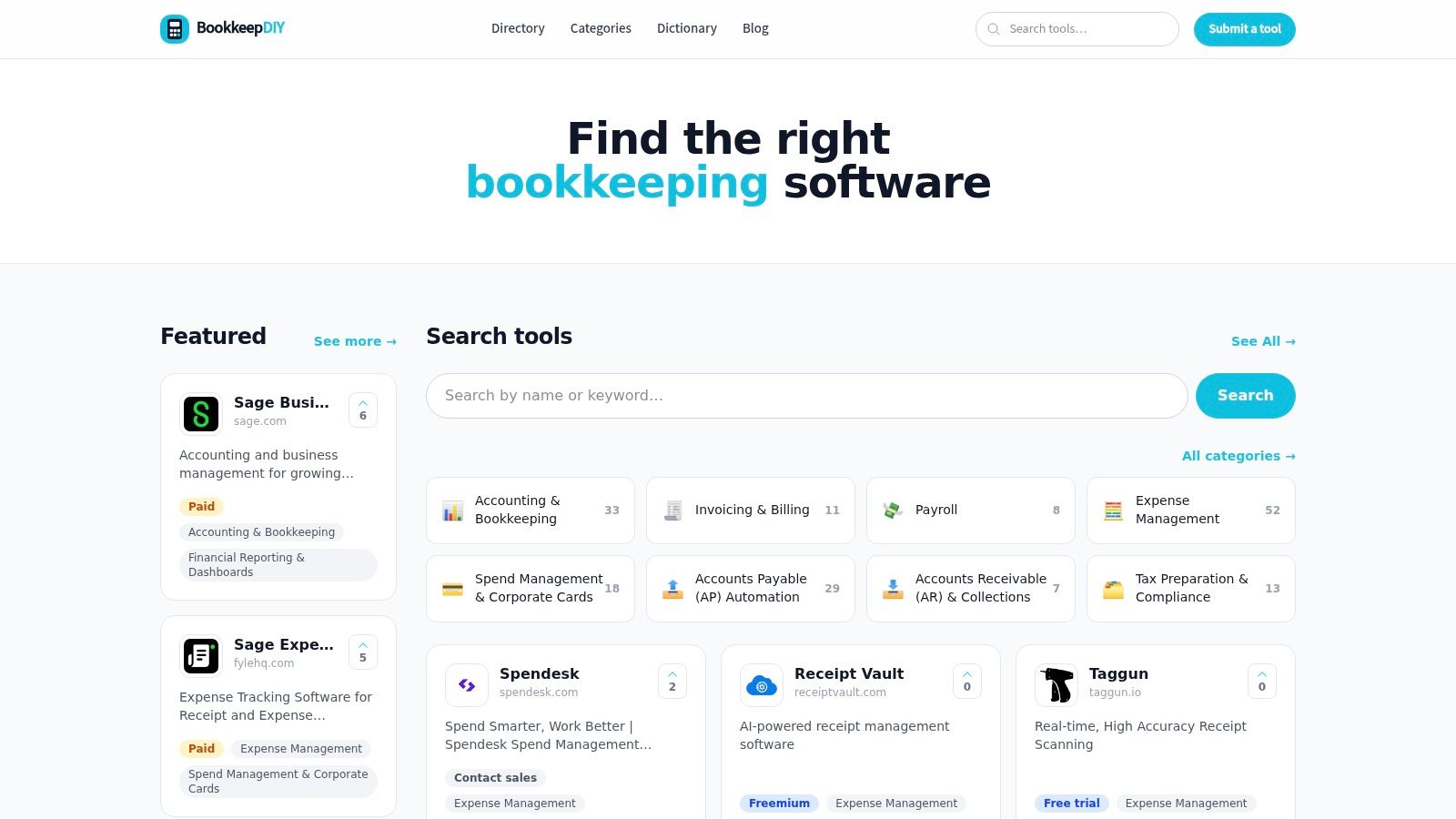
If you're comparing DIY options, trying to understand bookkeeping terms, or narrowing down finance back-office software without wasting hours on scattered research, BookkeepDIY gives you a practical place to start. It combines a bookkeeping dictionary, software directory, and plain-language guides built for freelancers and small businesses that need clarity before they commit.