

Recipient copies of Form 1099-MISC are generally due by February 2, 2026, the paper IRS filing deadline is March 2, 2026, and the electronic IRS filing deadline is March 31, 2026. If you're staring at a stack of contractor, rent, or attorney payment records and trying to decide what goes where, the calendar is simpler once you see it as two separate clocks.
One clock is for the person who gets the statement. The other is for the IRS. That split is the reason the due date for 1099-MISC can feel confusing at first, especially if you've only ever heard the old “January deadline” version.
The 2026 Due Date for 1099-MISC at a Glance
For the 2025 tax year filed in 2026, the recipient copy of Form 1099-MISC is generally due February 2, 2026, the paper IRS filing deadline is March 2, 2026, and the electronic IRS filing deadline is March 31, 2026. The dates move because January 31 falls on a weekend adjustment, and the IRS says weekend or holiday deadlines roll to the next business day. Leap years don't change the due date.
That's the basic calendar most first-time filers need. The form isn't governed by one single day anymore. It runs on a split timeline, one date for furnishing the form to the payee and another for filing with the IRS.
Practical rule: if you can remember only one thing, remember that the recipient copy usually comes first, and the IRS filing date comes later.
This split matters because your job isn't finished when the form is printed or emailed. You still need to make sure the IRS gets the filing on time, and the deadline depends on whether you mail it or file electronically. That's why the same form can feel like it has two different due dates.
A simple way to think about it is this. You're preparing one package for the payee and another package for the IRS, and each package has its own delivery rule. The rest of the guide breaks down how those clocks work, where the common traps are, and how to build a clean filing calendar instead of guessing at the last minute.
How the 1099-MISC Deadline System Works
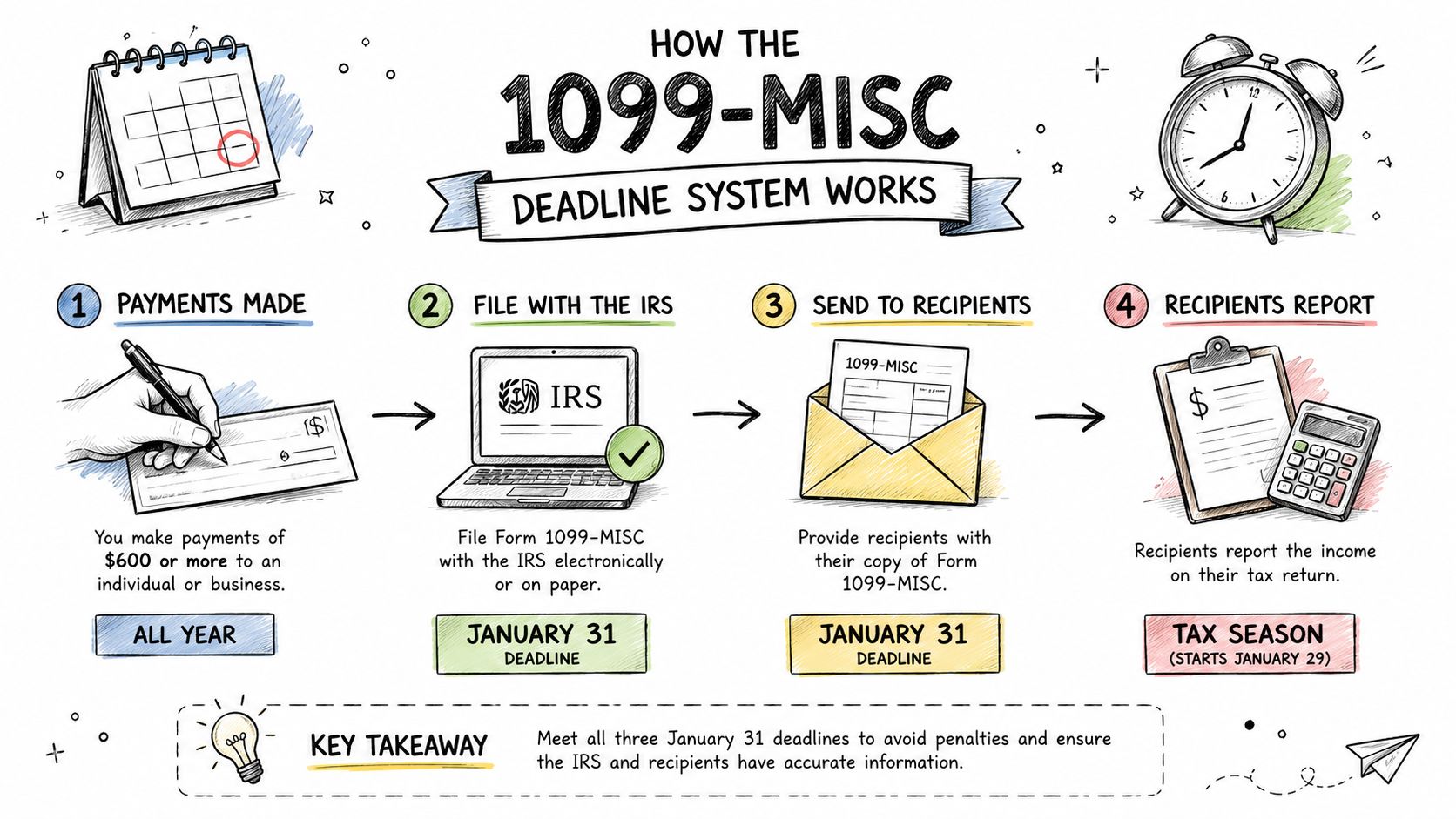
Think of Form 1099-MISC like mailing two letters that are related but not identical. One goes to the payee, and the other goes to the IRS. The deadlines don't match because the IRS wants payees to receive their statements first, while the government copy can follow later.
That's also why the old one-size-fits-all January deadline no longer describes the whole picture. The IRS separated 1099-NEC from 1099-MISC, and that split left 1099-MISC on a later filing schedule. In practical terms, the IRS filing window for 1099-MISC is usually 28 or 31 days later than recipient delivery, depending on whether you file on paper or electronically, as explained in the IRS instructions for information returns. IRS 1099-MISC instructions
Two clocks, one form
The first clock is the recipient clock. That's the date by which your vendor, contractor, attorney, or other payee should have the form in hand. The second clock is the IRS clock. That's when the government wants its copy, either by mail or through an electronic filing system.
The form is not late just because one clock is met and the other isn't. Each deadline stands on its own.
New filers usually get tripped up. They hear “1099 deadline” and assume there's one universal date. There isn't. There's a delivery date and a filing date, and the second one changes depending on paper or electronic submission.
Why the split exists
The split timeline reflects a broader compliance pattern. Businesses have to furnish information to the people who earned the payment, then transmit the same information to the IRS. The system gives the IRS a little more time because it's processing filings at scale, especially when forms are filed electronically.
That design also explains why deadline pages can look inconsistent at a glance. Some pages talk only about recipient copies. Others talk only about IRS filing. If you keep the two clocks separate in your head, the rest of the calendar makes sense much faster.
1099-MISC Versus 1099-NEC Deadline Differences
The easiest way to avoid deadline confusion is to separate the forms by purpose first. 1099-MISC covers certain miscellaneous payment categories, while 1099-NEC is used for nonemployee compensation. The filing dates differ because the forms now live on different calendars.
For most filers, 1099-NEC is the faster-moving form. It was moved to a fixed January 31 deadline for both recipient copies and IRS filing, while 1099-MISC kept the later IRS schedule. If you handle both forms, you can't safely use one deadline as a substitute for the other.
| Form | Used For | Recipient Copy Due | Paper IRS Due | Electronic IRS Due |
|---|---|---|---|---|
| 1099-MISC | Miscellaneous payment categories | February 2, 2026 | March 2, 2026 | March 31, 2026 |
| 1099-NEC | Nonemployee compensation | January 31, 2026 schedule | January 31, 2026 schedule | January 31, 2026 schedule |
A quick memory trick helps here. If you're paying a freelancer for services, you're usually thinking about 1099-NEC. If you're reporting things like other miscellaneous payment categories that belong on 1099-MISC, you're on the later calendar. That distinction matters because the internal workflow changes too, and bookkeeping teams often use different review steps for the two forms. Internal payroll workflow reference
What this means in practice
The difference isn't just a date on a calendar. It changes how early you need to pull records, confirm W-9 details, and review totals. A business that handles both forms should treat them as two separate filing projects, not one blended year-end task.
Keep the forms separate in your process, not just in your folder names. That one habit prevents a lot of deadline mistakes.
If you only remember one comparison, remember this one. 1099-NEC is the tight January form. 1099-MISC is the form that often gives you a little more runway, but only for the IRS filing side.
The Box 8 and Box 10 Exception
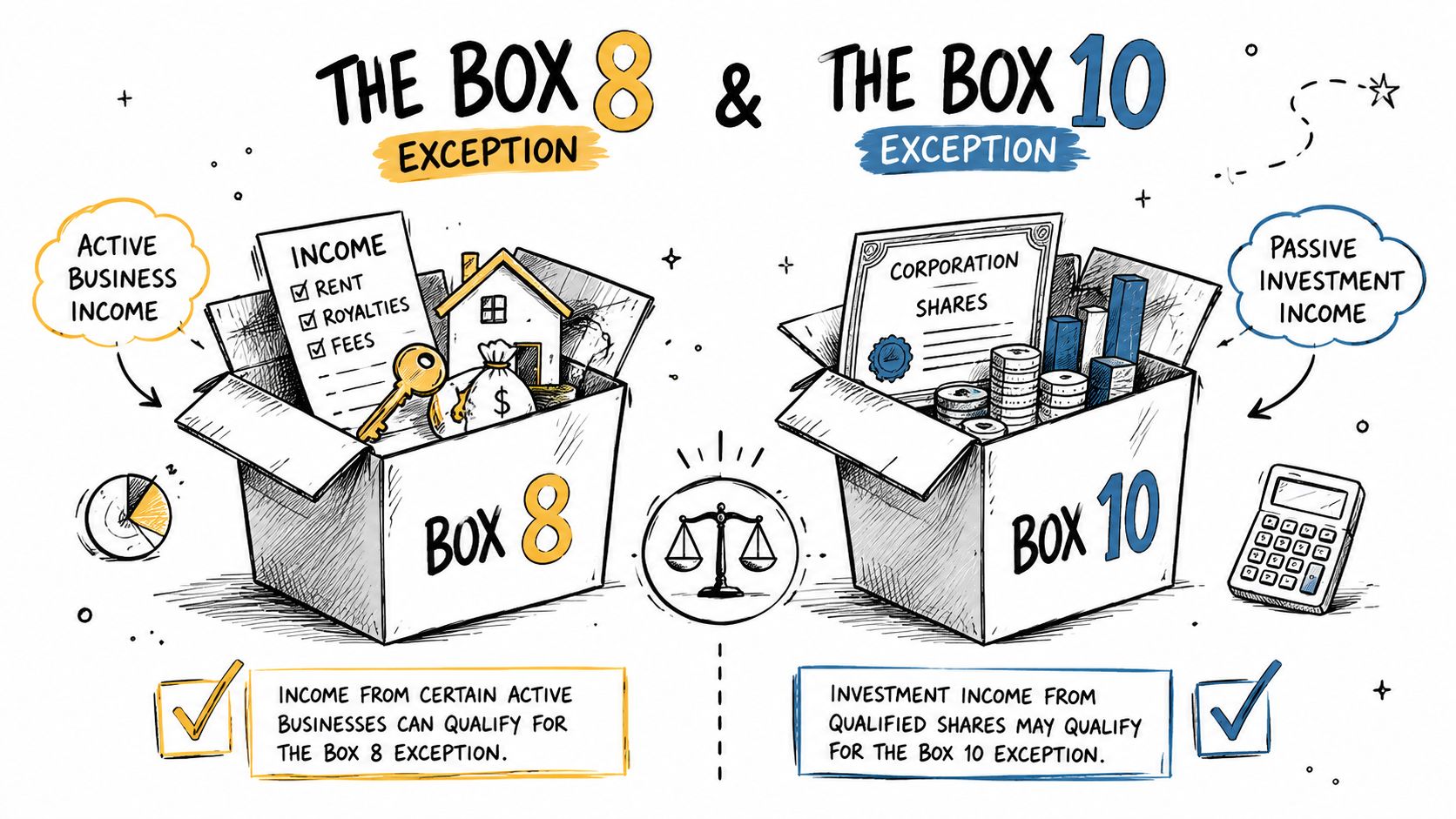
Some 1099-MISC filings get a small extra window for the recipient copy, but only when the form reports amounts only in Box 8 or Box 10. Box 8 covers substitute payments, and Box 10 covers attorney gross proceeds. The IRS instructions treat that as a special recipient-statement exception, not a new IRS filing deadline. IRS Publication 1099
That means the recipient copy is due February 15 under the standard rule, with the practical 2026 weekend adjustment pushing it to February 16 or 17, 2026 depending on the source's calendar treatment. The IRS filing deadline stays the same, March 2, 2026 for paper or March 31, 2026 electronically. The extra time helps with recipient delivery, not with IRS filing.
A brokerage example
Suppose a brokerage issues a 1099-MISC that reports only substitute payments. The office gets a little more breathing room before sending Copy B to the payee. That short extension can be useful when final account activity is still being reconciled or when statement production takes extra review time.
But the brokerage still has to protect the IRS deadline. The later recipient date does not push the IRS filing forward. The reporting team still needs to finish its internal checks in time to meet the March filing window.
A law firm example
Now take a law firm that receives gross proceeds reported in Box 10. The recipient copy can follow the special Box 10 rule, but the IRS schedule does not change. That's the part people miss when they assume every 1099-MISC form follows the same date.
Only the recipient clock shifts for the Box 8 and Box 10 exception. The IRS clock stays put.
This is why generic deadline pages often create mistakes for brokers, attorneys, and similar filers. They flatten every 1099-MISC into one rule, then readers apply the wrong date to a narrow category. If your form has only Box 8 or Box 10 amounts, separate that filing from your ordinary miscellaneous forms and give it its own review pass.
The practical takeaway is simple. Check the boxes first, then check the deadline. That order saves more confusion than memorizing calendar dates alone.
Paper Versus Electronic Filing Deadlines
Paper filing and electronic filing are not just two delivery methods. They are two different workflows, with two different IRS due dates. Paper filing gives you the March 2, 2026 IRS deadline for 1099-MISC, while electronic filing extends that IRS deadline to March 31, 2026.
That extra time is one reason many small businesses choose e-filing. It's not only about the later date, it's about the cleaner process. Electronic filing usually includes validation steps before submission, so obvious errors can be caught earlier than they would be on a mailed paper packet.
A simple trade-off table
| Filing Method | 2026 IRS Due Date | Effort Level | Confirmation Speed |
|---|---|---|---|
| Paper | March 2, 2026 | More manual, more assembly | Slower, dependent on mail and processing |
| Electronic | March 31, 2026 | More setup up front, less manual handling | Faster, with submission acknowledgement |
That trade-off matters most when you have more than a handful of forms or when vendor data is still being cleaned up in early March. A paper packet can be perfectly valid, but it leaves less room for last-minute corrections and less visibility into whether the IRS accepted the filing. A digital workflow usually gives you a cleaner audit trail and less physical paperwork.
When e-filing makes sense
If you're filing a small number of forms and your records are already clean, paper may still be manageable. If you're dealing with multiple vendors, multiple payment types, or a team that needs a shared review trail, e-filing is usually the safer default.
If your process still depends on printing, signing, stuffing, and mailing forms, you're probably giving yourself less time than you need.
The practical rule is straightforward. Use electronic filing when you want the later IRS deadline and a faster confirmation process. For most businesses that file 1099s regularly, that combination is easier to control than a paper mailing deadline. Document workflow reference
Extensions, Corrections, and Penalty Exposure
A freelancer waits until the first week of March to gather records, then realizes one vendor file is missing a tax ID. That's when the deadline starts feeling real. The fix isn't panic, it's sequence, because the IRS treats extensions, recipient delivery, and corrections as separate steps.
The IRS offers an automatic 30-day extension to file, but that extension does not extend the deadline for furnishing recipient copies. In other words, you may get more time to send Copy A to the IRS, but you still have to get the recipient statement out on time. That distinction matters because a common mistake is assuming one extension covers everything.
What to do if something is wrong
If you catch an error after filing, use the same form type to correct it. A correction should be handled quickly, especially if the issue involves a wrong amount, name, or TIN. The goal is to fix the record, not to wait and hope it disappears.
File the correction as soon as the mistake is confirmed. Waiting rarely helps, and it can make the paper trail messier.
Penalty exposure is where the cost of delay shows up. The verified penalty tiers you asked to use start at $60 per form for late filings within 30 days and rise to $310 per form for intentional disregard, with annual inflation adjustments and caps. Those figures make the filing timeline more than an administrative task, they make it a real compliance deadline. Tax compliance reference
How to think about the risk
The penalty structure is meant to push filers toward timely, accurate reporting. Honest mistakes are handled differently from deliberate nonfiling, but late action still creates exposure. The safest response is to correct quickly, document what happened, and keep the filing trail organized.
A practical habit helps here. Keep a note of when the recipient copy was sent, when the IRS copy was filed, and when any correction was made. That record makes it easier to respond if you ever need to explain a delay or a correction later.
A Practical Filing Checklist for 2026
Start with your vendor records, not with the form itself. Throughout January, gather W-9s, confirm legal names and addresses, and match each payment to the right box or form category. That early cleanup is what keeps the deadline from turning into a scramble.
A clean workflow looks like this:
- Collect and verify vendor data early. Confirm the payee name, address, and TIN before the end of January so you're not chasing missing information after the recipient deadline.
- Sort payments by form and box. Separate ordinary 1099-MISC items from the Box 8 and Box 10 exception, because those recipient deadlines are different.
- Deliver recipient copies by the first business day after January 31. For 2026, that means the February 2 recipient date for most forms, with the box-specific exception handled separately.
- Reconcile and file with the IRS by March 31 if you e-file. If you're on paper, use the earlier March 2 date instead.
- Review accepted filings and correct issues quickly. Don't wait for a year-end cleanup if you catch a mismatch sooner.
A good bookkeeping setup helps because the deadline is really a workflow problem. Look for tools that can generate 1099s, support TIN matching, and file electronically, so the review and submission steps live in one place. That kind of setup is especially useful when you're handling a mix of miscellaneous payments and need to keep the two clocks straight.
Before you file, check for any state-specific variations. Some states follow federal timing closely, but you still need to confirm the rules that apply where you operate and where your payees are located. A few extra minutes of review is cheaper than redoing a filing later.
If you want a calmer way to handle year-end reporting, BookkeepDIY can help you compare bookkeeping and tax-compliance tools without the jargon. Visit BookkeepDIY to find software guidance, plain-English explanations, and directory listings that make the 1099-MISC filing process easier to plan.