

Managing business expenses might not be the most exciting part of running a company, but it is one of the most important. Poor expense tracking leads to cash flow problems, missed tax deductions, and financial surprises that can threaten even a profitable business.
This article walks you through the best practices small business owners can use to take control of their expenses, reduce waste, and keep their finances organized year-round.
Key Takeaways
- Separate personal and business finances from day one
- Use software to automate tracking and reduce manual errors
- Set a clear expense policy, even if your team is small
- Review expenses regularly, not just at tax time
- Keep digital records of every receipt and transaction
Why Expense Management Matters for Small Businesses
Small businesses operate on tighter margins than large corporations. A few untracked expenses or reimbursement errors can quickly add up and distort your financial picture.
Good expense management helps you:
- Understand where your money is actually going
- Prepare accurate tax returns and claim every deduction you are entitled to
- Spot wasteful spending before it becomes a habit
- Make smarter decisions about hiring, investing, and growth
The good news is that you do not need a large finance team to manage expenses well. The right habits and tools make it manageable for any business owner.
Separate Business and Personal Finances Immediately
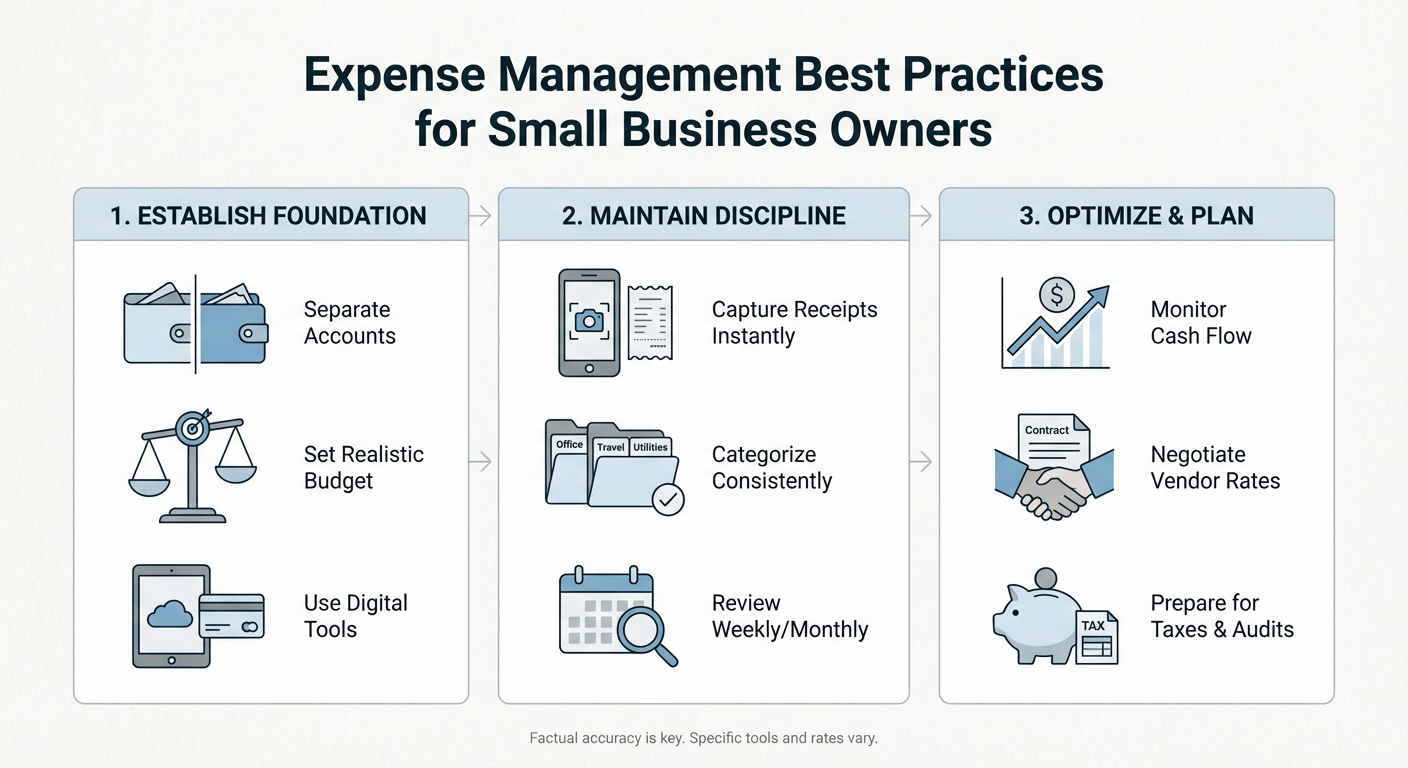
This is the single most important step for any small business owner. Mixing personal and business spending creates confusion, complicates your taxes, and makes it nearly impossible to get a clear picture of your business finances.
What to do:
- Open a dedicated business checking account
- Get a business credit card for all company purchases
- Pay yourself a salary or owner's draw rather than pulling from the business account randomly
- Never use business funds for personal expenses, even temporarily
Once your accounts are separate, tracking becomes much simpler and your accountant will thank you.
Choose the Right Expense Tracking Software
Spreadsheets work in the early days, but they do not scale well. As your business grows, manual tracking becomes time-consuming and error-prone.
Expense management software automates the tedious parts and gives you real-time visibility into your spending.
Features to look for:
- Receipt scanning with optical character recognition (OCR)
- Integration with your accounting software (QuickBooks, Xero, FreshBooks)
- Automatic categorization of expenses
- Mileage tracking for business travel
- Multi-user access for teams
| Tool | Best For | Starting Price |
|---|---|---|
| [Expensify](https://use.expensify.com/resource-center/guides/travel-and-expense-policy-best-practices-with-expensify) | Freelancers and small teams | Free / $5 per user/month |
| QuickBooks | Full accounting integration | From $30/month |
| [Ramp](https://ramp.com/blog/expense-management) | Business card + expense management | Free (card required) |
| [Wave](https://www.waveapps.com/accounting-p/expense-tracking) | Very small businesses on a budget | Free |
| Zoho Expense | Growing teams with approval workflows | Free / $4 per user/month |
Choose a tool that fits your current size but can grow with you. Switching platforms later is disruptive and time-consuming.
Create a Simple Expense Policy
Even if you are a solo operator or have just a few employees, a written expense policy prevents confusion and keeps spending consistent.
Your policy does not need to be a lengthy document. A one-page guide covering the basics is enough to start.
What your expense policy should cover:
- Which types of expenses are approved for reimbursement
- Spending limits per category (meals, travel, software subscriptions)
- How to submit expenses and what documentation is required
- Reimbursement timelines so employees know when to expect payment
- Who needs to approve expenses above a certain threshold
A clear policy protects both you and your team. It removes the guesswork and reduces awkward conversations about whether a purchase was appropriate.
Track Every Receipt in Real Time
Waiting until the end of the month to sort through receipts is a recipe for missing expenses and wasting hours on administrative work.
The best habit you can build is capturing receipts immediately after every purchase.
Practical tips for staying on top of receipts:
- Use your expense app to photograph receipts the moment you get them
- Forward email receipts to a dedicated folder or directly to your expense tool
- Set a weekly 15-minute block to review and categorize recent transactions
- Never rely on memory alone for expense details
Most modern expense tools can extract the vendor name, date, and amount from a photo automatically. This makes real-time tracking fast and painless.
Categorize Expenses Correctly for Tax Purposes
Proper categorization is not just about organization. It directly affects how much you pay in taxes and whether you can defend your deductions in an audit.
Common small business expense categories:
- Office supplies and equipment
- Marketing and advertising
- Software and subscriptions
- Travel and transportation
- Meals and entertainment (note: only 50% deductible in most cases)
- Professional services (legal, accounting, consulting)
- Home office expenses (if applicable)
Work with your accountant to set up categories that align with IRS Schedule C or your business tax structure. Consistent categorization throughout the year makes tax preparation much faster and more accurate.
Review Your Expenses Regularly
Monthly expense reviews are one of the highest-value habits a small business owner can build. They take less than an hour and can save you significant money over time.
What to look for during a monthly review:
- Subscriptions you are no longer using
- Spending categories that are trending upward unexpectedly
- Duplicate charges or billing errors
- Expenses that are approaching your budget limits
- Opportunities to negotiate better rates with vendors
Many business owners discover they are paying for software tools they forgot about or services that no longer deliver value. A regular review catches these before they drain your budget quietly.
Manage Employee Expenses and Reimbursements Carefully
If you have employees who spend on behalf of the business, you need a clear and efficient reimbursement process.
Best practices for employee expense management:
- Issue company cards where possible to eliminate out-of-pocket reimbursements
- Require receipts for all purchases above a minimum threshold (for example, $25)
- Use an approval workflow so managers review expenses before reimbursement
- Process reimbursements on a consistent schedule, such as every two weeks
- Audit expense reports periodically to catch errors or policy violations
Employees appreciate fast, predictable reimbursements. A smooth process also reduces the administrative burden on your finance or operations team.
Plan for Irregular and Seasonal Expenses
Many small businesses have expenses that do not occur every month. Annual software renewals, seasonal inventory, equipment maintenance, and conference fees can strain your cash flow if you do not plan ahead.
How to prepare:
- List all known annual and irregular expenses at the start of each year
- Divide the total by 12 and set aside that amount monthly in a reserve account
- Build a simple annual budget that accounts for seasonal fluctuations
- Review and update this list each quarter as new expenses arise
Treating irregular expenses as predictable costs rather than surprises gives you much better control over your cash flow.
Conclusion: Build the Habits That Keep Your Finances Healthy
Expense management does not have to be complicated or time-consuming. The key is building simple, consistent habits and using the right tools to support them.
Your next steps:
1. Open a dedicated business bank account and credit card if you have not already
2. Choose an expense tracking tool that fits your business size
3. Write a one-page expense policy covering the basics
4. Set a recurring weekly reminder to capture and categorize recent expenses
5. Schedule a monthly review to audit spending and catch waste early
Start with one or two of these steps this week. Small improvements in how you manage expenses compound over time into real financial clarity and stronger business performance.