
Your first freelance payment lands in your account. It feels great until you notice what's missing. No tax withholding. No employer handling the paperwork. Just the full amount, sitting there and raising a question you didn't have to ask at a regular job.
That moment catches a lot of people off guard. If you were paid on a 1099-NEC, drove for a gig app, did contract design work, or picked up clients on your own, the tax system usually expects you to pay as you earn. Think of it as pre-paying your tax bill in installments instead of waiting to settle everything at filing time.
Your Guide to Quarterly Estimated Taxes
A new freelancer often assumes taxes work the same way they did with a paycheck. Then the first untaxed payment arrives, and the whole system suddenly feels blurry. You know you'll owe something, but the hard part is figuring out when, how much, and what happens if your income jumps around from month to month.
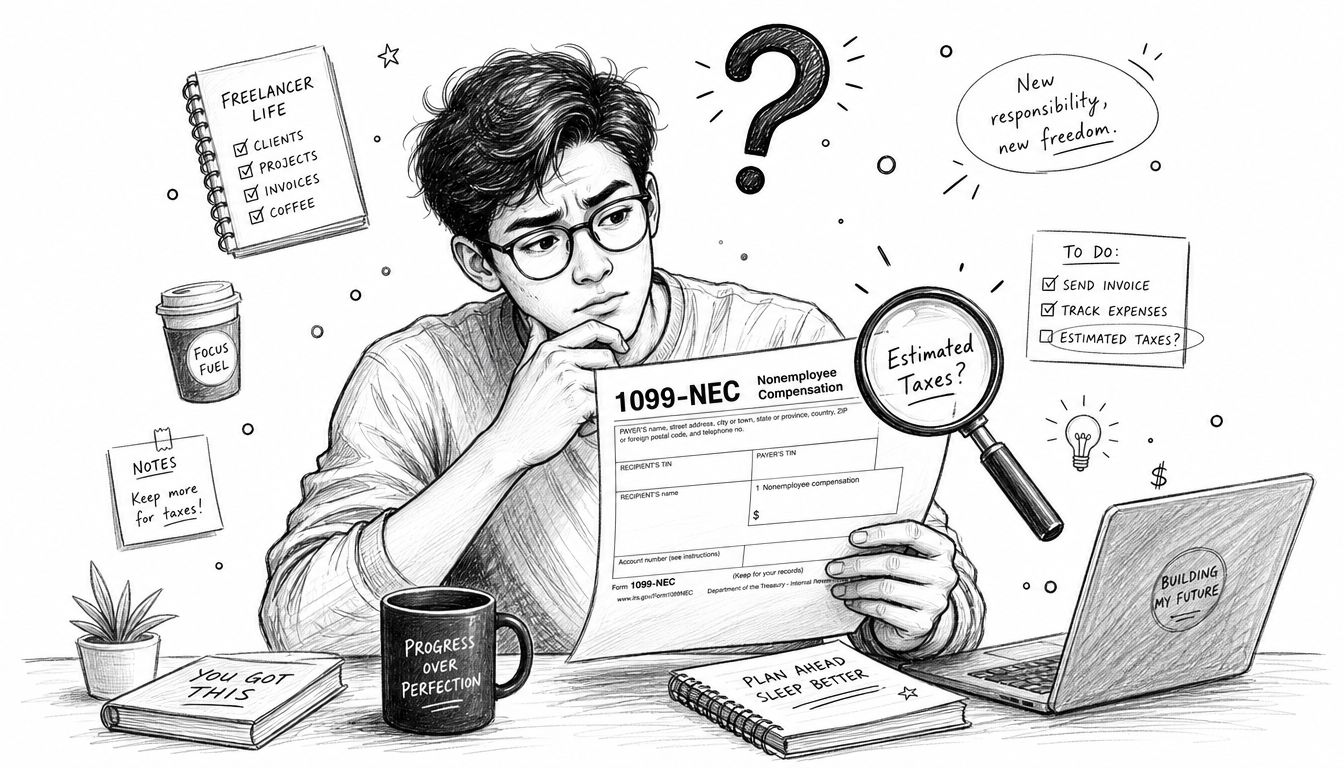
Quarterly estimated tax payments are the federal system for paying taxes during the year when nobody is withholding them for you. If you're self-employed, the IRS generally expects those payments to happen as income comes in, not all at once at the end.
That sounds heavier than it really is. In practice, you're doing three things:
- Estimating your profit so you have a rough tax target
- Sending payments on a schedule instead of in one painful lump
- Keeping records so tax season is organized, not chaotic
Practical rule: Treat estimated taxes like setting aside money for rent. The money may still be in your account, but it isn't fully yours to spend.
Freelancers usually get stuck in the same places. They don't know whether they even need to pay. They aren't sure how to estimate income when every month looks different. And many miss an option that can help when income is uneven: the annualization method.
A steady salary makes tax withholding automatic. Freelance income doesn't. Once you understand that shift, the process becomes much easier to manage.
Who Needs to Pay Estimated Taxes
A common freelancer moment goes like this. You finish a few client projects, payments start landing in your account, and then one question creeps in. Do I need to send taxes in now, or can I wait until I file my return?
For federal taxes, the usual rule is straightforward. If you expect to owe at least $1,000 for the year after subtracting any withholding and credits, estimated tax payments are generally part of the job. The IRS is basically asking you to prepay your tax bill in installments instead of waiting until April.
Common situations where this applies
Estimated taxes usually apply to people who earn money without automatic withholding, including:
- Freelancers and independent contractors paid on 1099s
- Gig workers such as rideshare drivers, delivery drivers, and other app-based earners
- Sole proprietors running a one-person business
- Partners and some S corporation owners who receive business income that passes through to them
A side hustle counts too. If you have a W-2 job during the day and freelance on nights or weekends, you may still need estimated payments if that extra income is not being covered by withholding from your paycheck.
A quick way to tell
Use this simple check:
- Am I getting income with no tax withheld?
- After expenses, do I expect to have enough profit that I could owe $1,000 or more for the year?
- Is there no employer sending that tax in for me?
If that sounds like your situation, estimated taxes probably apply.
One detail trips people up all the time. The trigger is not just money coming in. It is the tax you expect to owe after looking at profit, deductions, and your full return. If you want a clearer picture of how income fits into that bigger calculation, this plain-English guide to adjusted gross income helps.
Why freelancers with uneven income need a different workflow
Freelance income rarely arrives in a neat, even pattern. You might have a strong spring, a slow summer, and a packed fall. That is why quarterly taxes can feel awkward. The calendar stays fixed even when your income does not.
In that situation, a fixed payment every quarter is not always the best fit. Some freelancers do better with a bookkeeping routine that reviews profit every month, updates the year-to-date estimate, and flags whether the next payment should change. Good bookkeeping software can make that much easier by showing current profit, separating owner spending from business expenses, and helping you avoid paying too little or too much.
There is also an often-missed option called the Annualization Method. It can help if your income is lumpy because it lets you base payments more on what you earned during each part of the year, rather than pretending every quarter looked the same.
When you might not need to pay
You may not need estimated payments if taxes are already being covered another way. For example, withholding from a spouse's paycheck or from your own W-2 job can sometimes cover the gap. You may also be below the threshold after expenses, credits, and other tax items are factored in.
That is why an early estimate helps. Even a rough one gives you a clearer answer than guessing.
How to Calculate Your Estimated Tax Payments
A lot of freelancers hit this section and assume the hard part starts now. It usually feels easier once you turn it into a repeatable routine.

The basic idea is simple. You are pre-paying your tax bill in installments, using your best estimate of what the year will look like.
Start with annual income and business profit
Suppose you are a freelance designer with three strong client months, one slow month, and a handful of invoices that will probably arrive late. Start by estimating your total income for the year, then subtract your ordinary business expenses. What is left is your net business profit, and that is the number that drives the tax estimate.
If tax terms start to blur together, a plain-English guide to adjusted gross income helps separate business profit from the bigger tax picture on your return.
A practical starting workflow looks like this:
- Add income already received
- Add signed or committed work you reasonably expect to be paid
- Subtract expenses already paid
- Subtract recurring costs you expect for the rest of the year
- Review the estimate regularly instead of treating your first guess as final
That last step matters most for freelancers with fluctuating income. A January estimate can be useful, but a May or August update is usually more accurate.
Add self-employment tax and income tax
Your estimate usually has two layers. One is self-employment tax, which covers Social Security and Medicare for self-employed workers. The other is federal income tax, which depends on your taxable income after deductions.
You do not need to memorize every worksheet line to understand the flow:
| Part of the estimate | What it means |
|---|---|
| Business profit | Income minus deductible business expenses |
| Self-employment tax | Tax tied to self-employment earnings |
| Income tax | Tax based on taxable income after deductions and other tax items |
A lot of new freelancers miss this point at first. They estimate only income tax and forget the self-employment portion, which makes the payment look smaller than it should.
The standard equal-payment method
The simplest method is to estimate your full-year tax and divide it into four planned payments. It works like paying a large bill a little at a time instead of waiting for one big due date.
This method is usually easiest when your income stays fairly steady through the year. If each quarter looks similar, equal payments are easy to budget for and easy to track in your books.
The annualization method for uneven income
Freelance income often arrives in waves. A web developer might earn very little in the first quarter, land two large projects in summer, and collect retainers at year-end. Equal payments can be awkward in that situation because they assume income showed up evenly.
The annualization method gives you another option. Instead of pretending each quarter looked the same, you calculate payments based more closely on what you earned during each period of the year. For freelancers with uneven cash flow, that can reduce the chance of paying too much during a slow stretch or too little after a strong quarter.
It is often overlooked, but it is useful.
A practical workflow for freelancers
A good system is less about perfect forecasting and more about keeping your estimate current. Before each payment due date, review your books and ask:
- How much profit have I earned so far this year?
- What changed since my last estimate?
- Do upcoming invoices or expenses change the picture in a meaningful way?
- Should I keep using equal payments, or does annualization fit this year better?
Bookkeeping software helps here because it shows current profit, expenses, and owner draws in one place. That makes it easier to spot whether you are drifting toward an overpayment or an underpayment before the deadline arrives.
For many freelancers, the best habit is a short monthly review and a deeper check before each estimated payment. That rhythm turns taxes from a last-minute scramble into a bookkeeping task you can manage with a clear process.
Deadlines and How to Avoid Penalties
A common freelancer scenario goes like this. You have a slow spring, a busy summer, and one strong client payment arrives right before a deadline. You send in what feels reasonable, then wonder later whether the IRS will see it the same way.
The key is knowing that estimated taxes work like prepaying your annual tax bill in installments. The deadlines matter, but the amount paid by each deadline matters too.
Federal estimated tax deadlines for calendar-year filers
For many freelancers who file on a calendar year, estimated payments usually fall in these windows:
| Payment Period | Typical Due Timing |
|---|---|
| First payment | mid-April |
| Second payment | mid-June |
| Third payment | mid-September |
| Fourth payment | mid-January of the following year |
If a due date falls on a weekend or holiday, the deadline usually shifts to the next business day. Check the IRS schedule for the specific tax year before you pay.
How the IRS usually looks at penalties
Underpayment penalties usually come from one of two problems:
- You paid too little for a payment period
- You paid after that period's due date
That second point catches freelancers off guard. Catching up later may still leave a penalty tied to the earlier quarter, because each due date is judged on its own.
A simple way to picture it is four checkpoints during the year. If one checkpoint is short, a larger payment at the next checkpoint does not always erase the first shortfall.
The safe harbor rules in plain English
There are two common ways freelancers stay out of trouble.
- Pay based on this year's tax. If your books are current, you can estimate what you owe for the year and pay enough as the year unfolds.
- Pay based on last year's tax. If your income is harder to predict, many freelancers use last year's return as a baseline because it gives them a fixed target.
In general, the IRS safe harbor rules focus on paying enough during the year based on either your current-year tax or your prior-year tax. If your income is high, the prior-year target can be higher. The exact threshold depends on your situation and filing details, so use your prior return and current books together instead of guessing.
For a repeatable system around due dates, bookkeeping reviews, and filing prep, this guide to small business tax compliance workflows can help.
Where freelancers with uneven income often miss a better option
Equal payments are simple, but they can be clumsy when your income arrives in waves.
If you earned very little early in the year and much more later, the Annualization Method may fit better. It lets you calculate each payment based more closely on what you earned during each part of the year, instead of pretending your income was flat the whole time. For freelancers with fluctuating income, that can reduce the chance of overpaying in a lean period or underpaying after a strong one.
This is one reason current bookkeeping matters so much. Good software can show year-to-date profit before each deadline, which makes it easier to decide whether equal payments still make sense or whether annualizing would better match your real income pattern.
A practical way to avoid penalties
Keep the process boring and repeatable.
Before each due date:
- Reconcile your accounts so your profit number is real
- Review what you have already paid this year
- Compare your current year to last year
- Decide whether equal payments still fit, or whether annualization makes more sense
- Submit the payment before the deadline, not on the assumption you can fix it later
You do not need perfect forecasting. You need a routine that catches changes while there is still time to adjust.
How to Pay and Track Your Payments
Once you've estimated the payment, the next job is simple execution. Make the payment, record it correctly, and keep enough detail that your annual return doesn't turn into a scavenger hunt.
Ways to submit the payment
Most freelancers use one of these methods:
- Direct online payment from a bank account if you want a simple one-time payment
- A recurring federal payment system if you like scheduling ahead
- Mailing a payment with a voucher if you prefer paper records
The best option is the one you will use on time. Convenience matters because friction creates delays, and delays create headaches.
What to record in your books
Many people blur two separate things. Your tax payment is not a business expense in the usual sense. It's generally a payment toward your personal tax liability. That means you want it clearly labeled so you don't mix it into normal operating costs.
Track each payment with these details:
| Record detail | Why it matters |
|---|---|
| Payment date | Helps you prove when you paid |
| Amount paid | Needed for your annual return |
| Tax type | Keeps federal estimated payments separate from other items |
| Confirmation or reference note | Makes verification easier later |
Clean records save time twice. Once when you're deciding what to pay next, and again when you're filing the return.
A freelancer-friendly workflow
Good bookkeeping software helps most when you use it before the deadline, not after. A practical rhythm looks like this:
- Categorize income weekly so your revenue doesn't pile up unreviewed.
- Post expenses consistently so your profit estimate isn't inflated.
- Create a dedicated account or category for estimated tax payments so they don't disappear into general transactions.
- Attach confirmation details right after payment while everything is still fresh.
- Review year-to-date profit before each deadline instead of guessing from your bank balance.
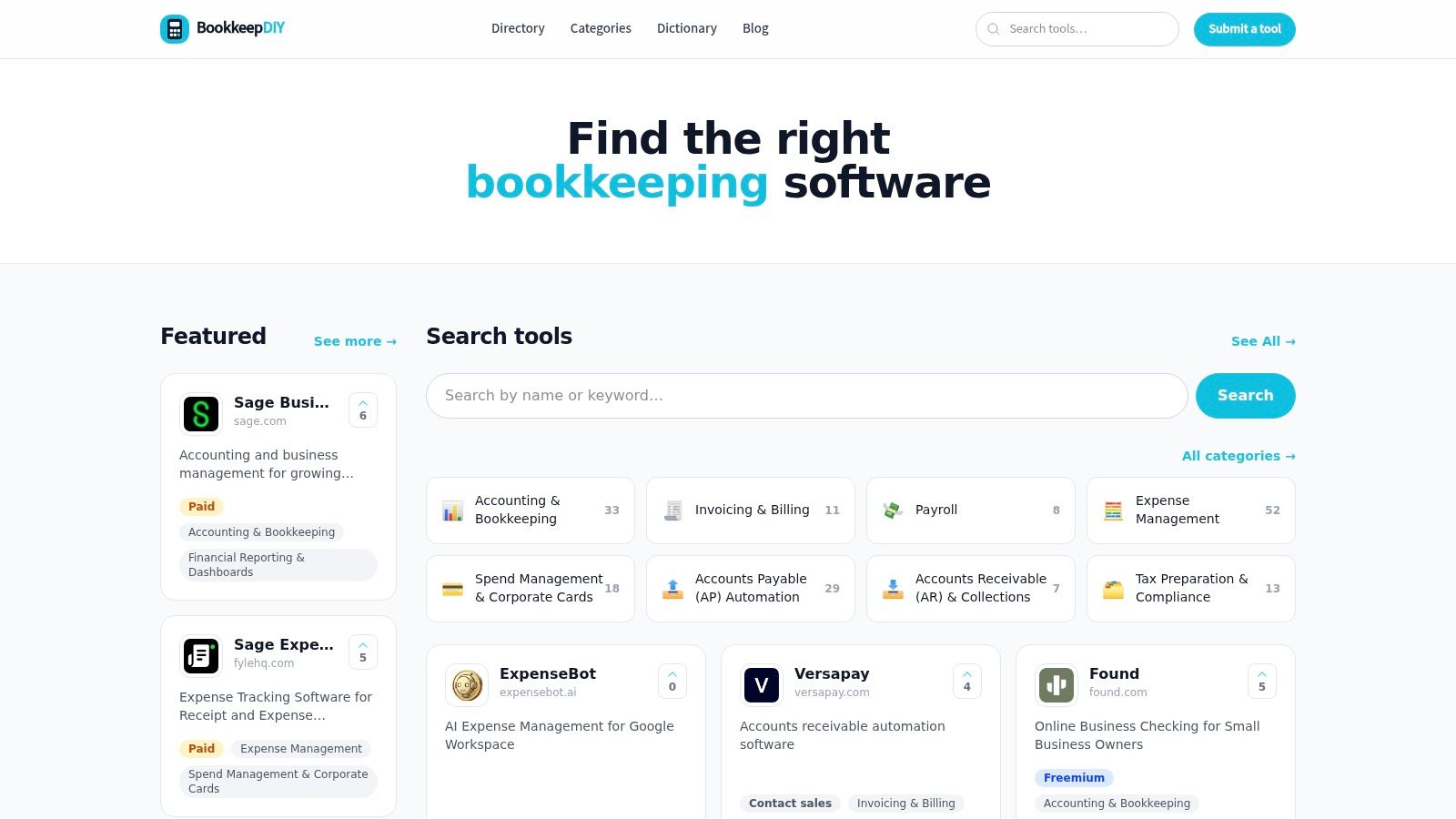
If you're evaluating financial workflow options, a curated directory like the Found listing on BookkeepDIY can help you explore bookkeeping-related categories without getting lost in unrelated software.
Why this matters at filing time
At tax filing time, you'll need to report what you've already paid. If you haven't tracked those payments carefully, it's easy to miss one or duplicate one. Both create unnecessary work.
A tidy ledger also helps when your income fluctuates. You can look at actual monthly trends, not vague impressions, and decide whether your next payment should follow the same pattern or be adjusted.
Frequently Asked Questions about Estimated Taxes
What if my income changes a lot halfway through the year
That is common in freelance work. One quarter can feel packed with client payments, and the next can feel unusually quiet.
Your estimated tax plan should change with your income. If your bookkeeping shows a big jump or drop in profit, recalculate before the next due date instead of repeating the first number you chose in January.
This is also where the annualization method can help. It works like paying based on what you earned during each part of the year, rather than forcing your income into four equal pieces. For freelancers with uneven cash flow, that can be a much better fit and may reduce the chance of paying too little in one quarter and too much in another.
Can I pay more than the minimum
Yes.
Some freelancers intentionally send extra when a large invoice clears, especially if they know later months may be slower. It can be a practical way to stay ahead without scrambling for cash near a deadline.
Just keep your records clean. If bookkeeping software or your ledger shows the date, amount, and confirmation for each payment, you will have a much easier time matching everything at filing time.
What happens if I overpay
An overpayment usually gets sorted out on your tax return. It can reduce what you owe later or increase your refund, depending on your full tax picture.
Some freelancers like that cushion because it lowers the chance of a surprise bill. Others would rather keep that cash available for business expenses. The better choice depends on your cash flow, how predictable your income is, and how confident you are about setting tax money aside consistently.
Do I need to make state estimated tax payments too
Maybe.
Federal and state estimated taxes are separate. Your state may require payments on its own schedule, with its own rules and thresholds, so it helps to check directly with your state tax agency.
Keep those records separate from your federal payments. Two simple categories in your books, one for federal and one for state, can prevent a lot of confusion later.
What if I missed one deadline already
Start from where you are now.
Estimate as accurately as you can with your current records, make the payment, and update your numbers again before the next due date. Waiting usually makes the problem harder to fix.
If your income has been uneven, this is another moment to ask whether the annualization method fits better than a flat approach. A good set of books can help you make that decision from actual profit numbers, not from memory or guesswork.
How much should I set aside from each payment I receive
There is no single percentage that fits every freelancer. Your tax bill depends on your profit, deductions, filing status, other income, and whether any taxes are already being withheld elsewhere.
A simple workflow helps more than chasing a perfect number. Each time a client pays you, move part of that money into a separate tax savings account or category. Then review your year-to-date profit regularly. That habit keeps your full deposit from feeling available to spend.
What's the simplest rule to remember
If you are self-employed and expect to owe at least some meaningful federal tax at filing time, do not wait until April to deal with it. Estimated taxes work like pre-paying your tax bill in installments during the year.
The simplest habit is this: review your bookkeeping before each due date, base your payment on current profit, and adjust when your income changes. For freelancers with fluctuating income, modern bookkeeping software can make this much easier by showing year-to-date income, expenses, and profit in one place, which helps you avoid both overpaying and underpaying.
If you want help making sense of bookkeeping terms and finding finance tools that fit a freelancer workflow, BookkeepDIY is a practical place to start. It offers plain-language learning resources and a curated software directory so you can build a cleaner system for tracking income, expenses, and tax-related tasks with more confidence.